Back
Kick: A Unified Pickup Soccer Platform for U.S. Soccer
Centralizing the match-finding experience for local players.
Project Results
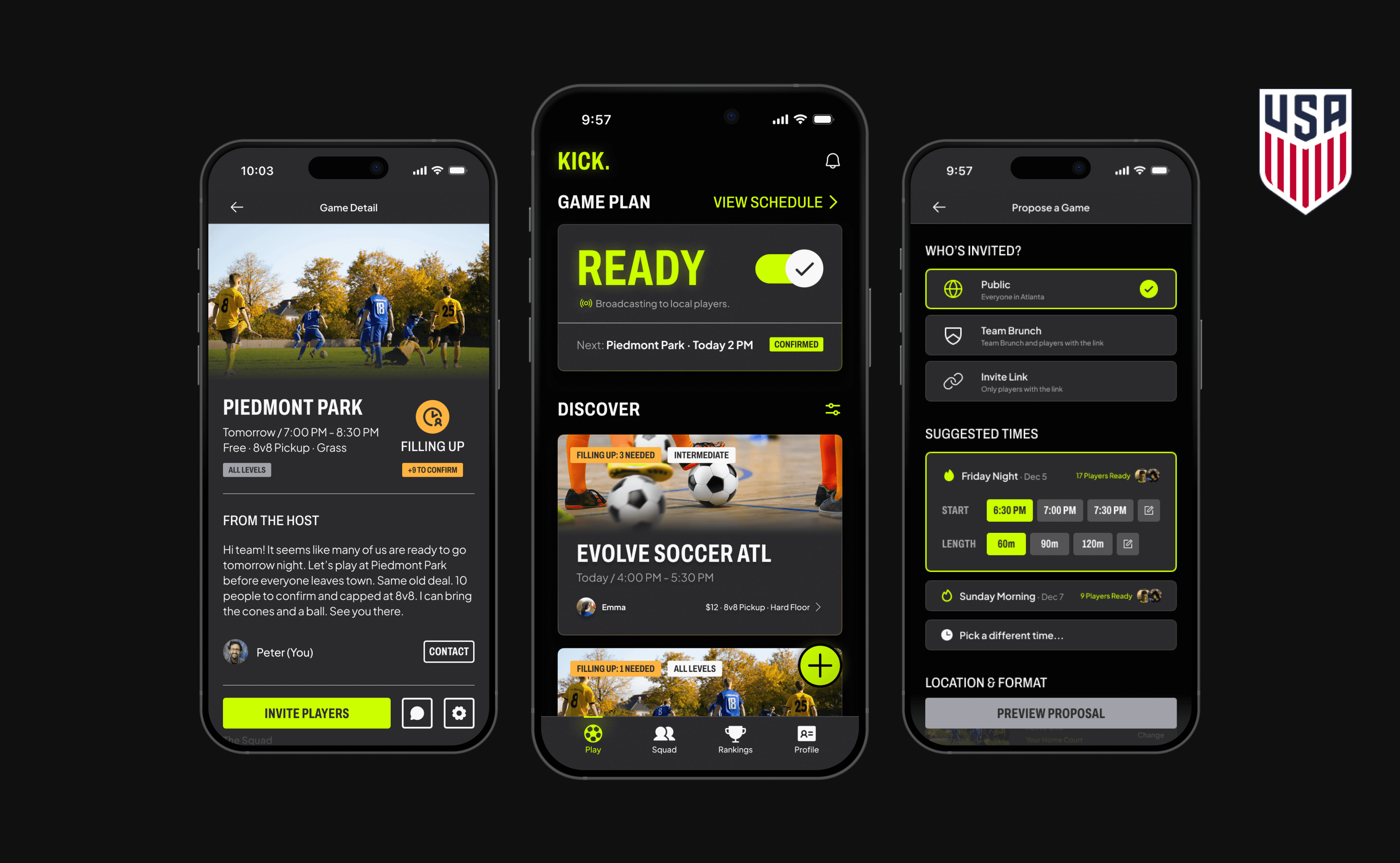
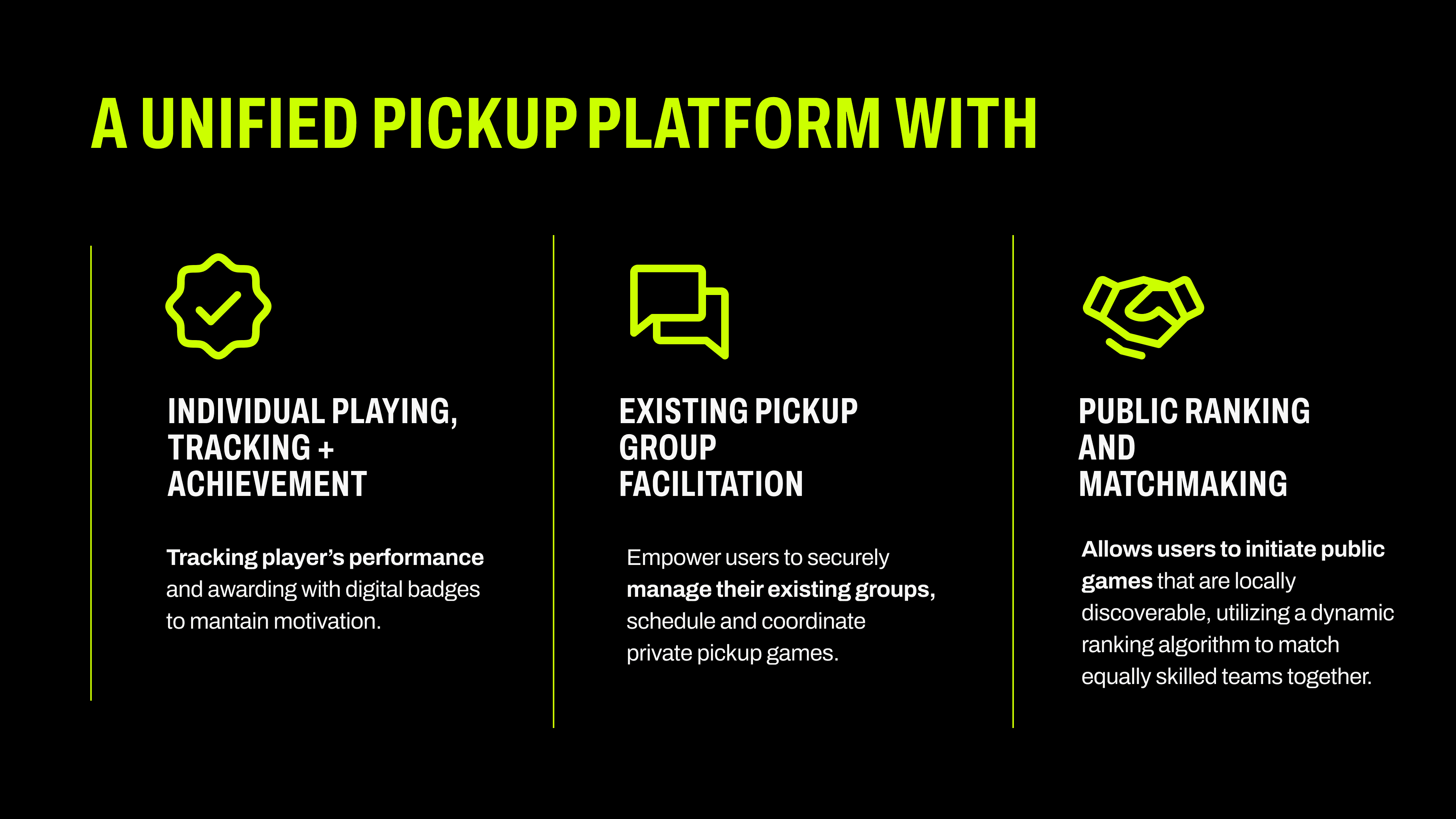
A mobile application enabling players to propose, locate, and communicate with teams for pickup matches.
Context
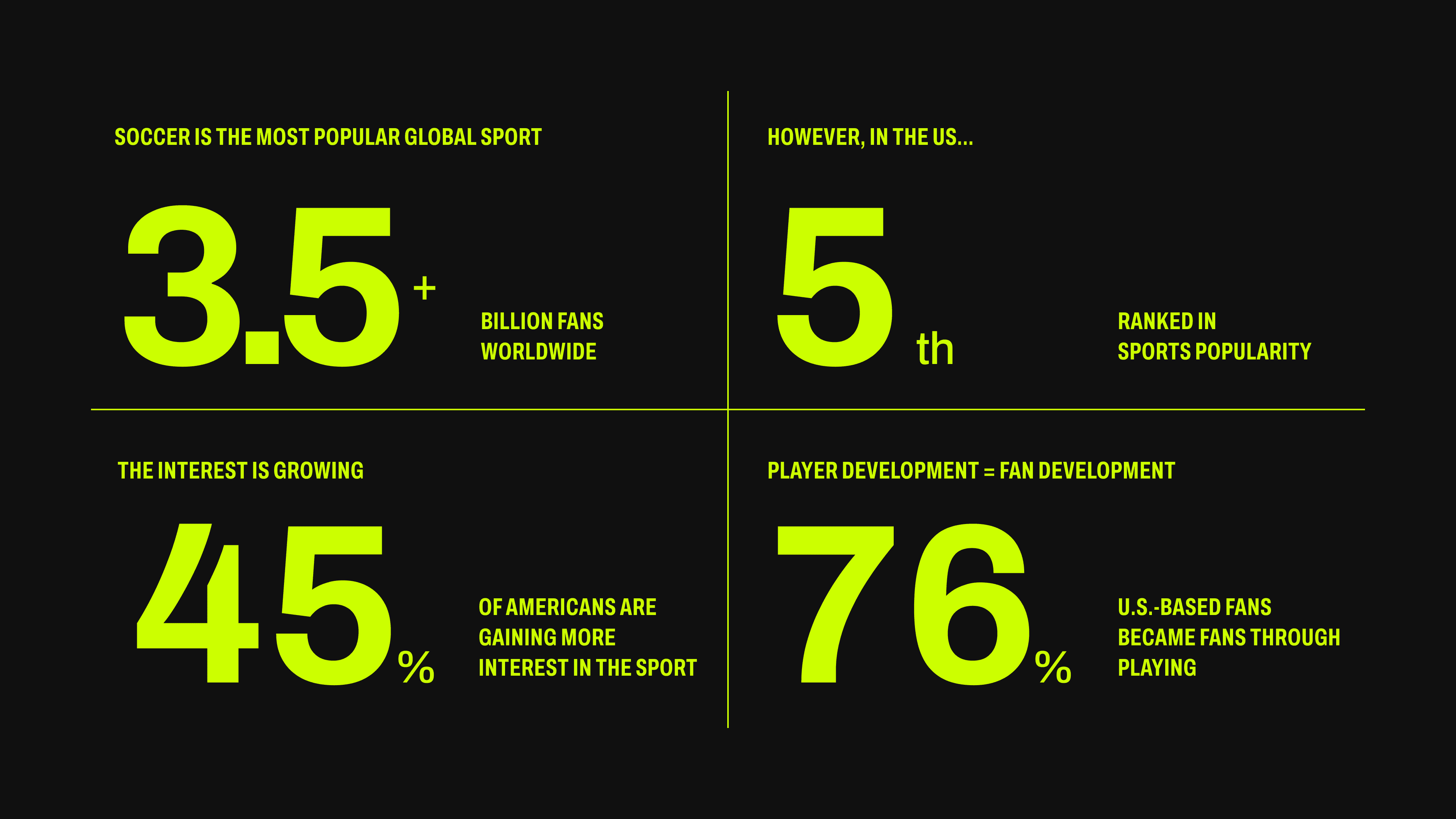
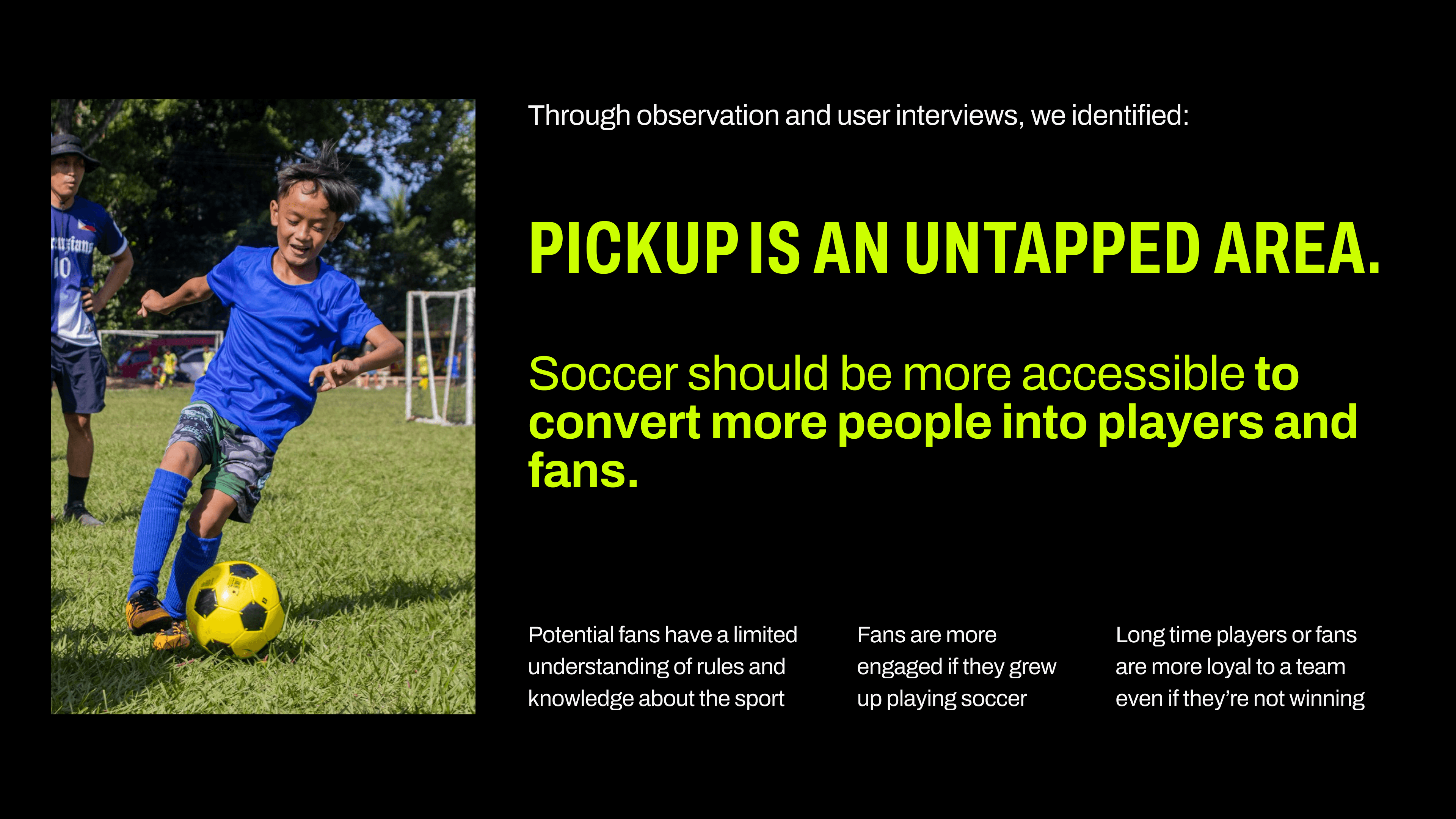
User Research & Key Insights: Through observational studies and expert interviews, we uncovered core themes.
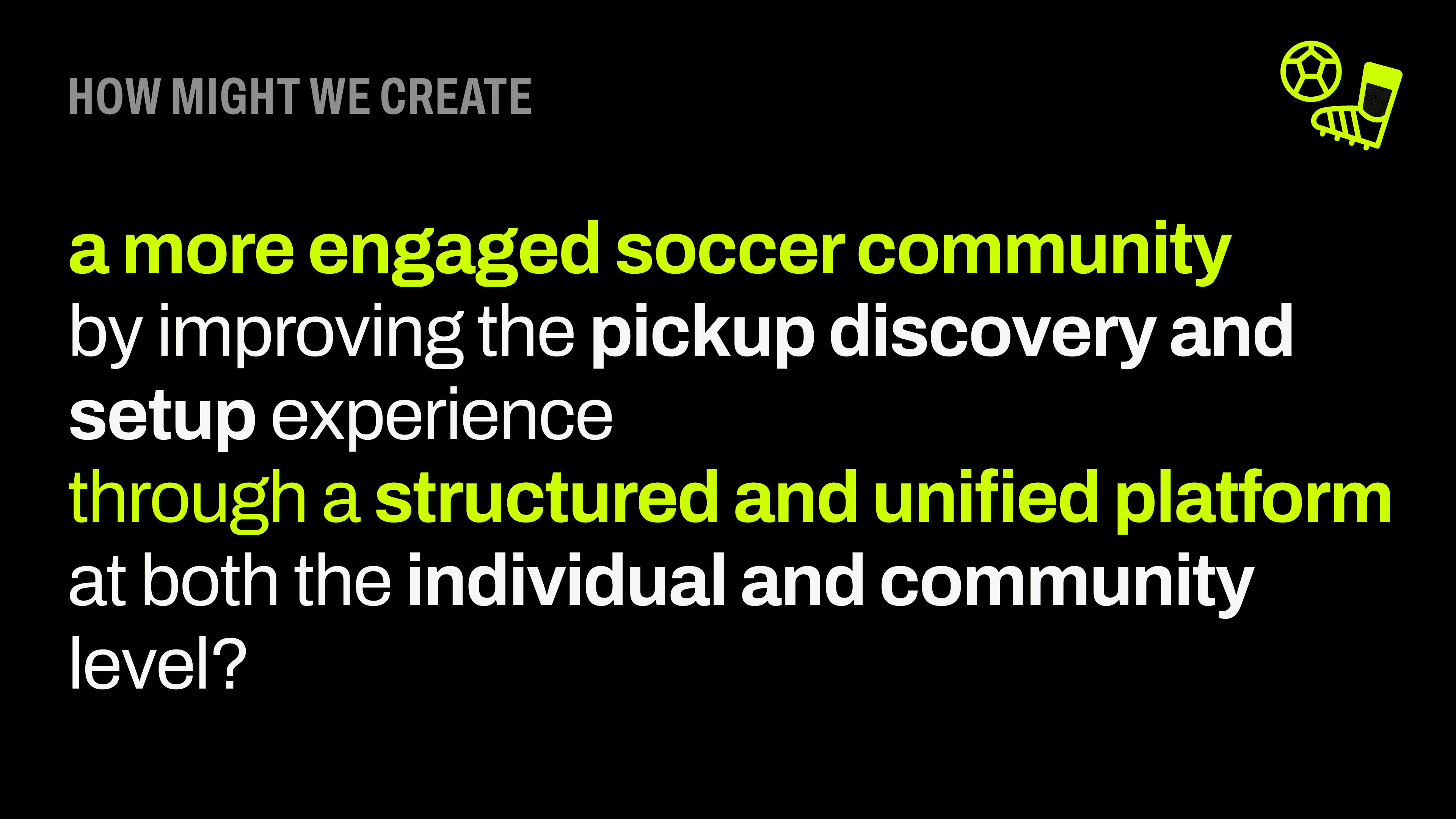
Problem Statement
User Research
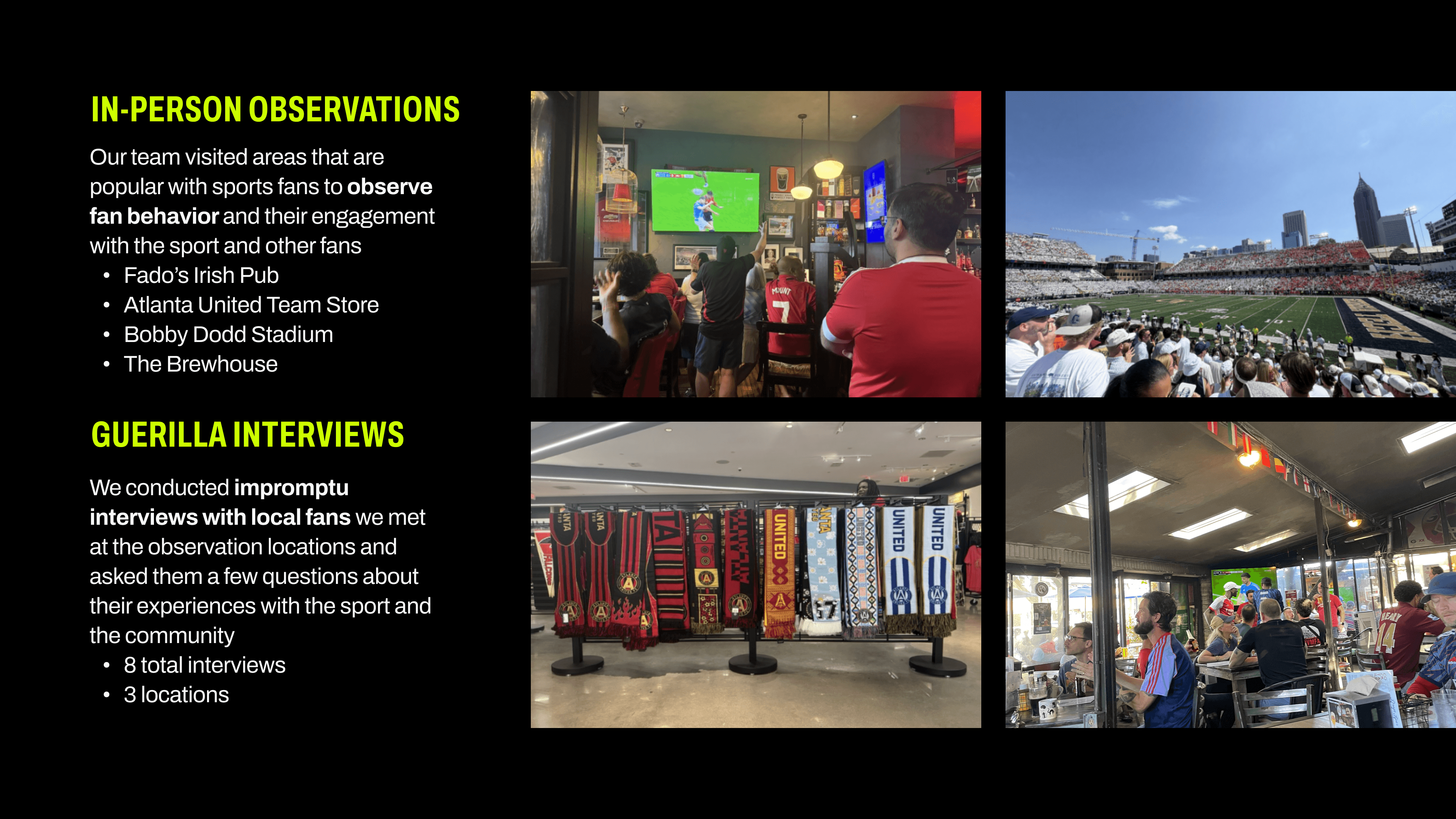
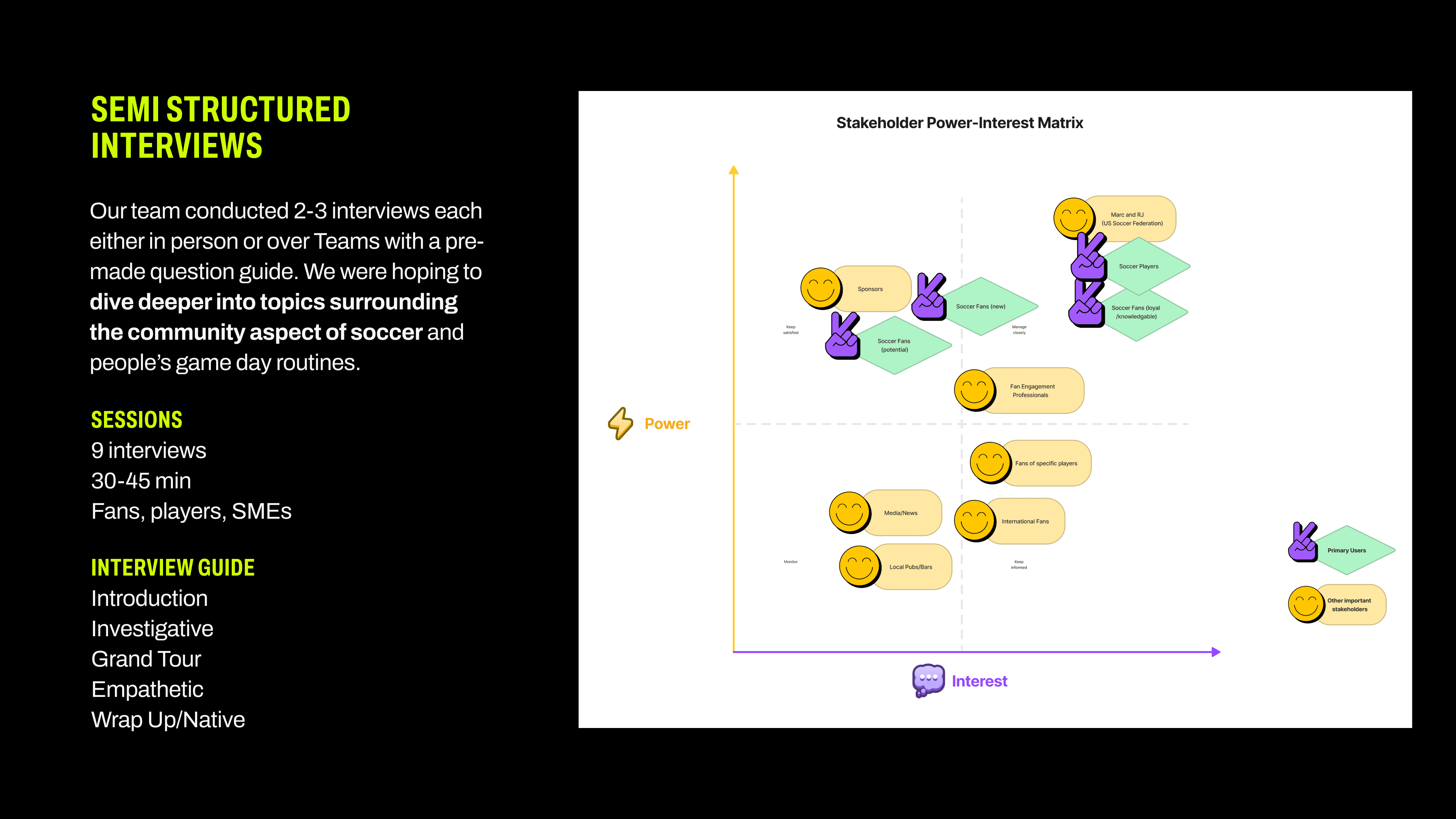
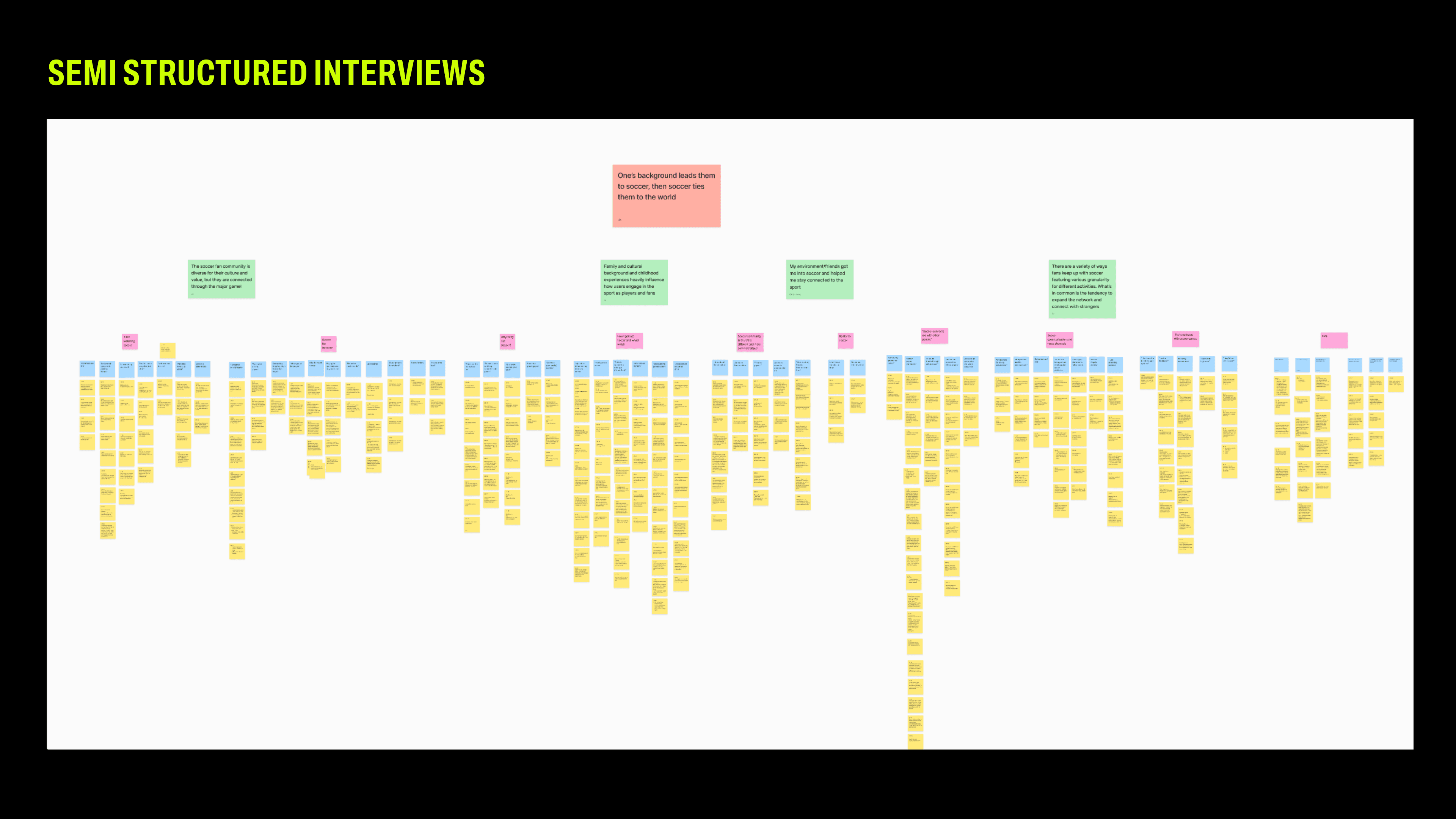
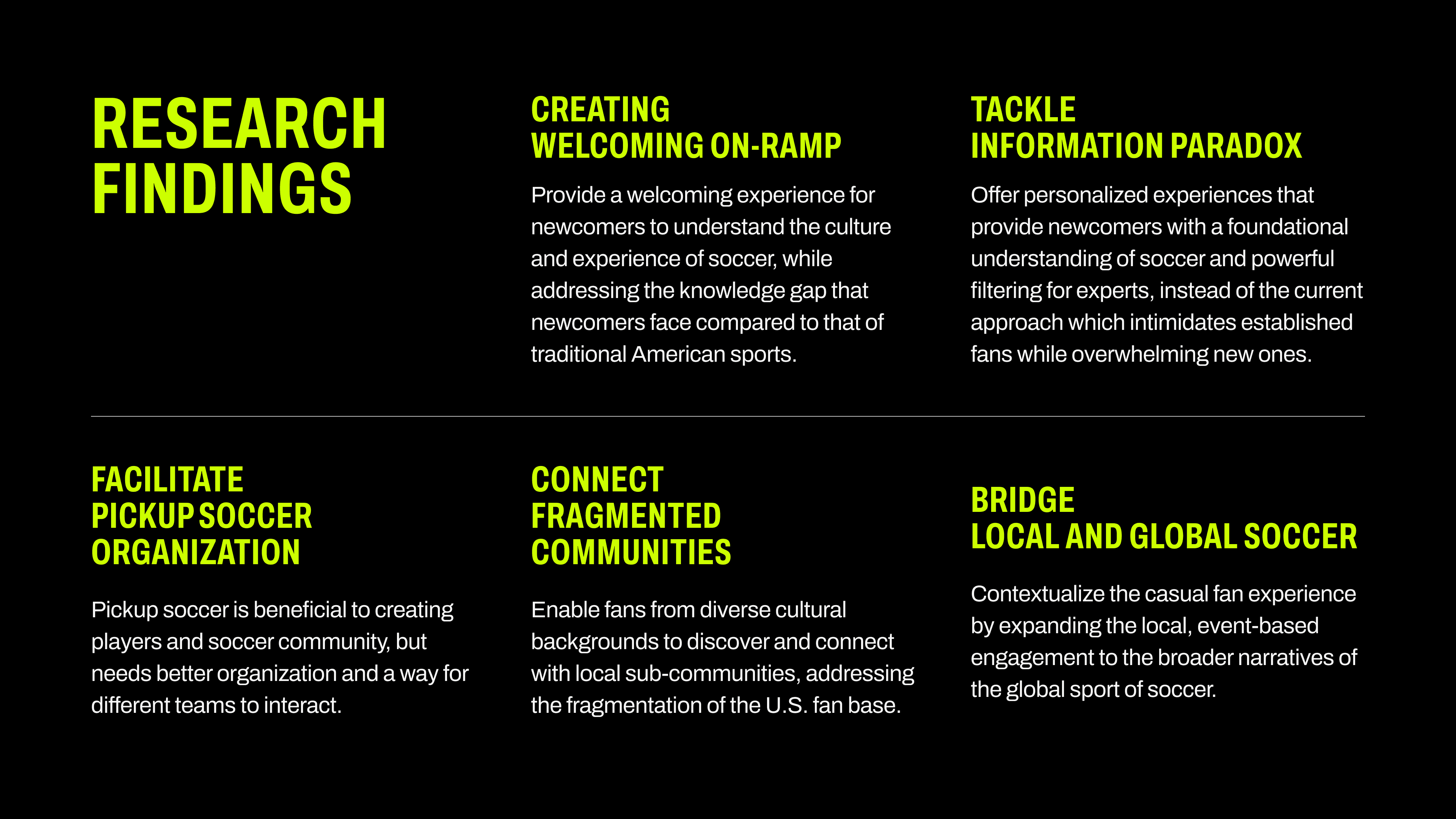
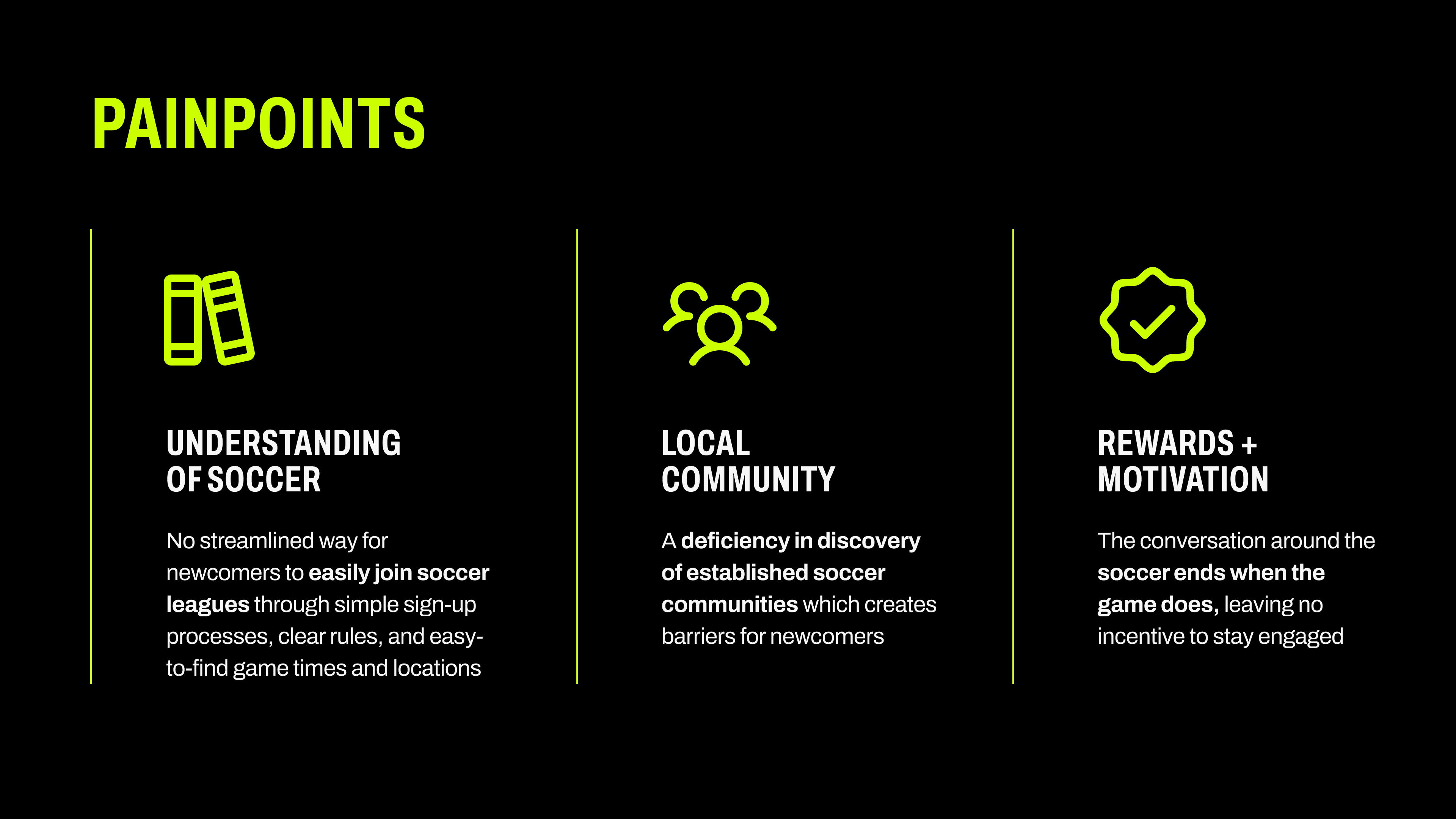
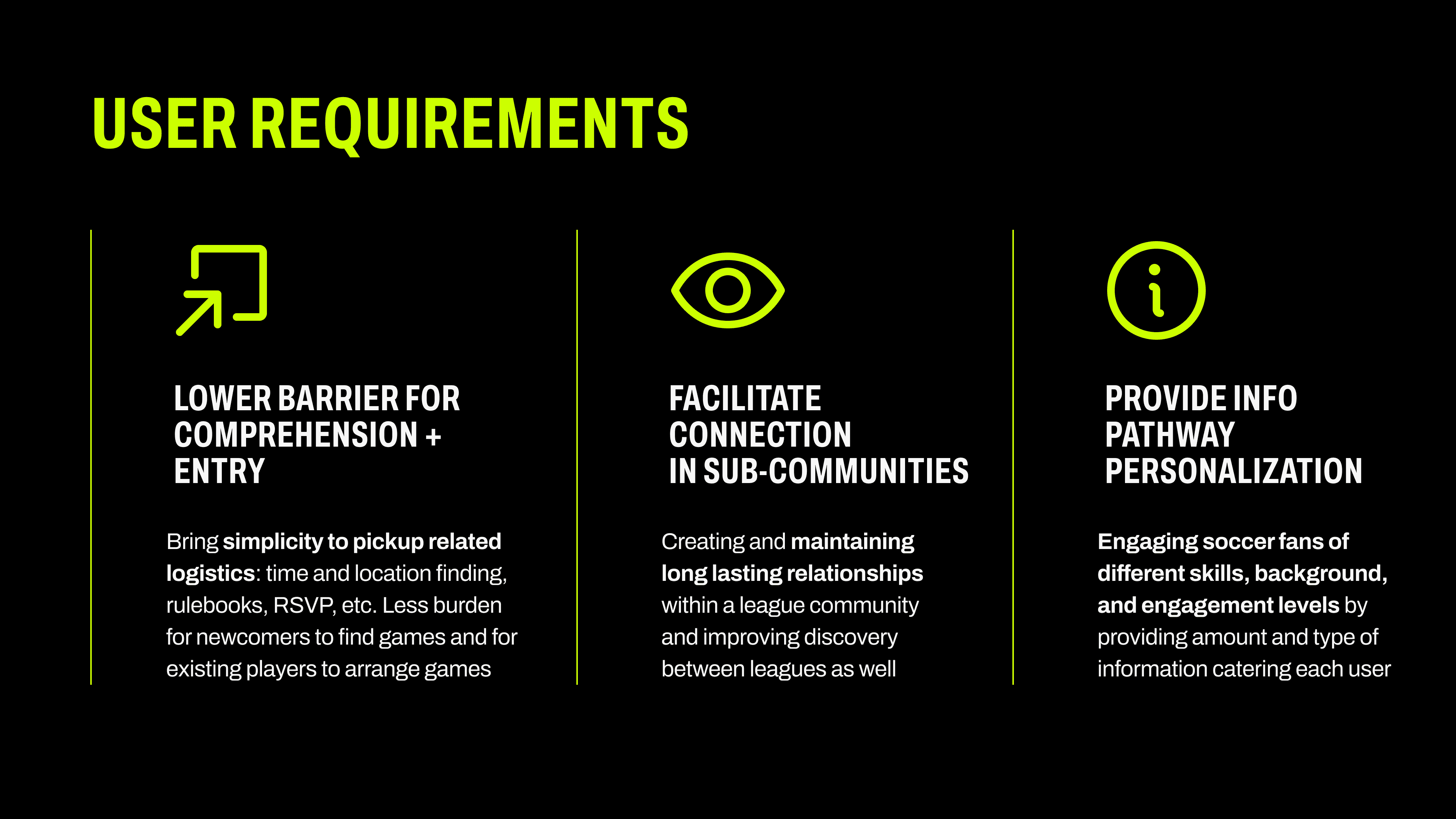
Our initial research highlighted three critical needs: streamlining the organization of pickup matches, creating a welcoming onboarding experience for new players, and reducing community fragmentation. To address this, we aimed to bridge the gap between local subcommunities and the global sport, fostering deeper connections across the U.S. Soccer fanbase.
Design Iteration + Evaluation
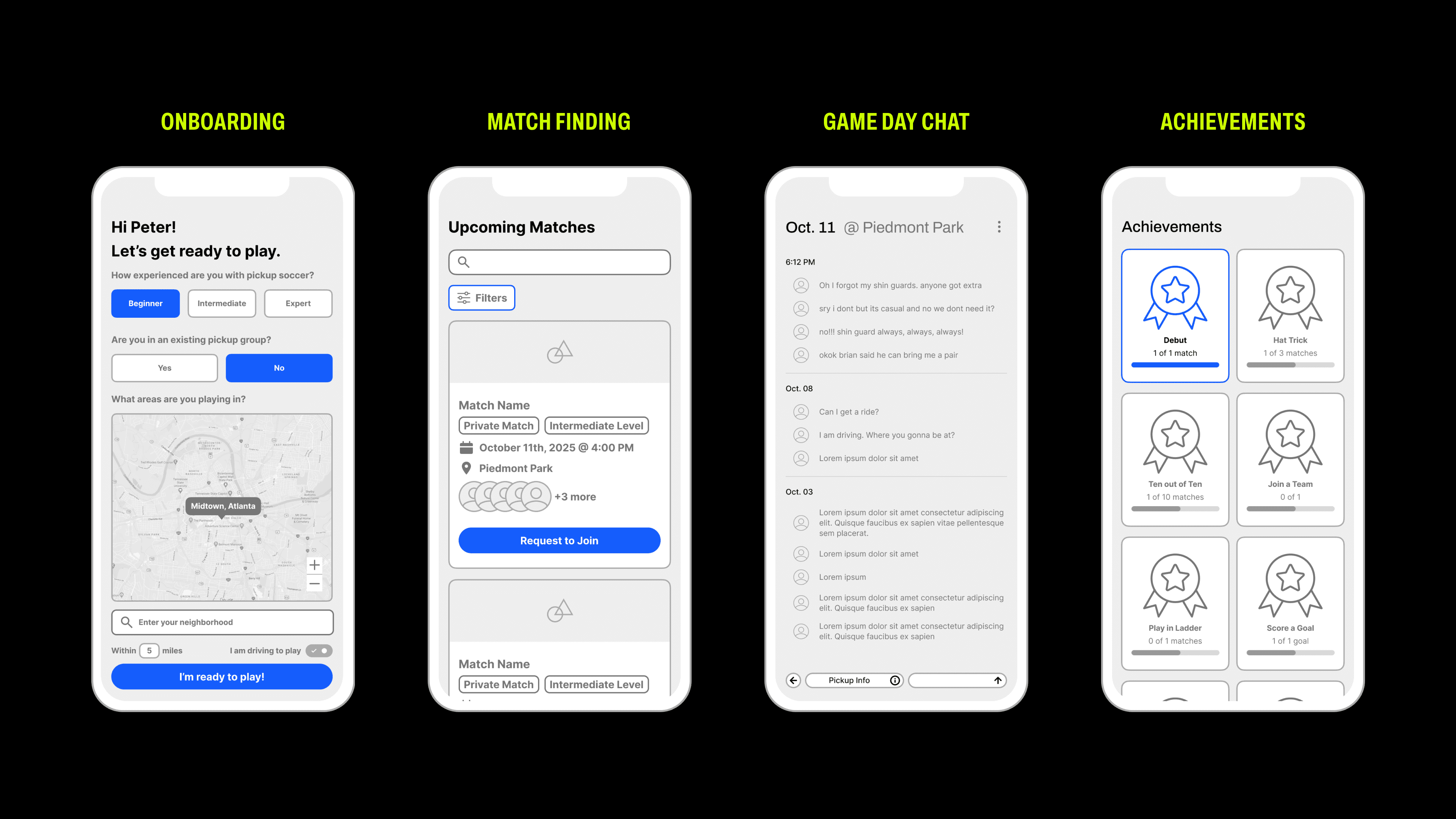
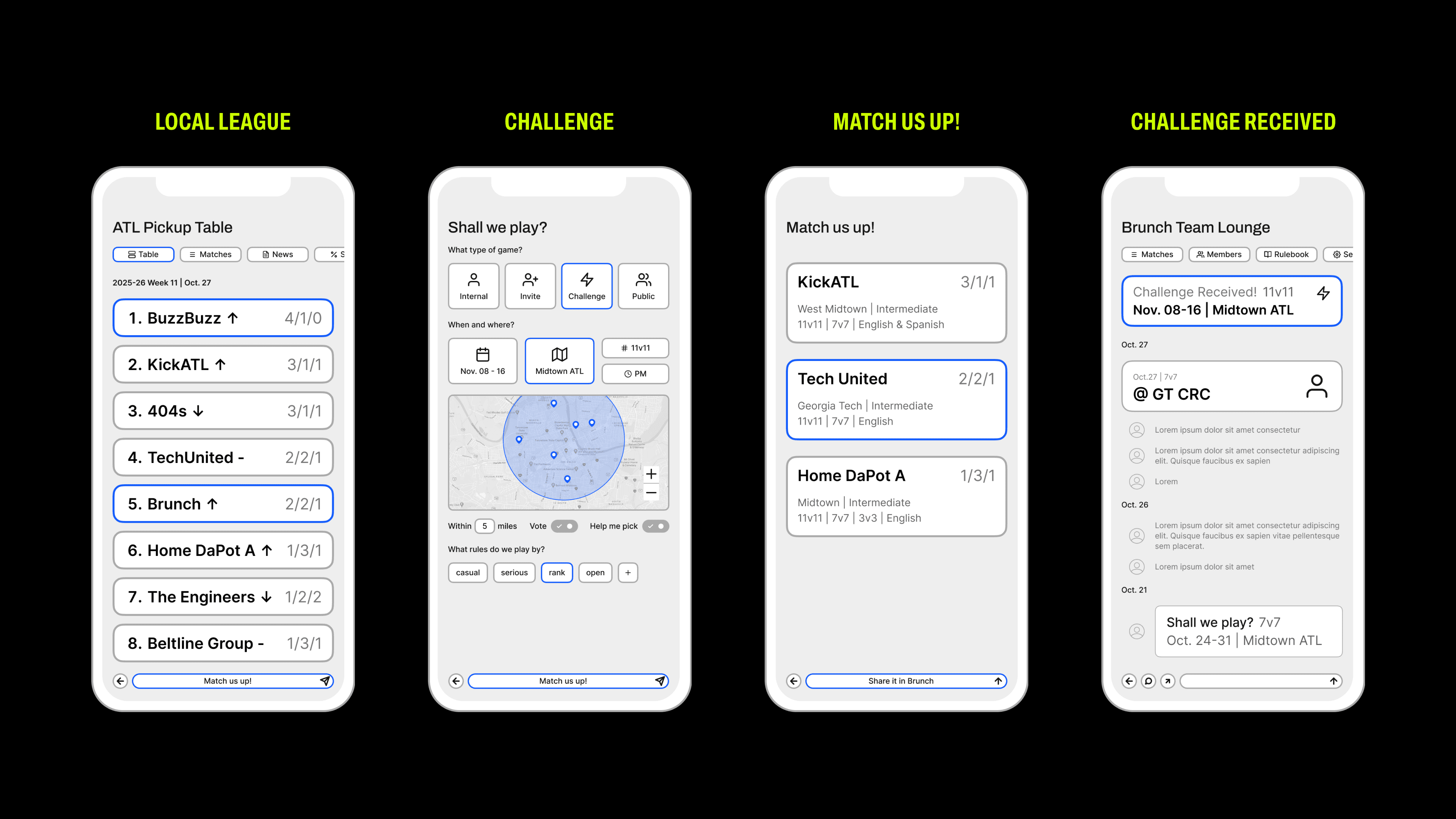
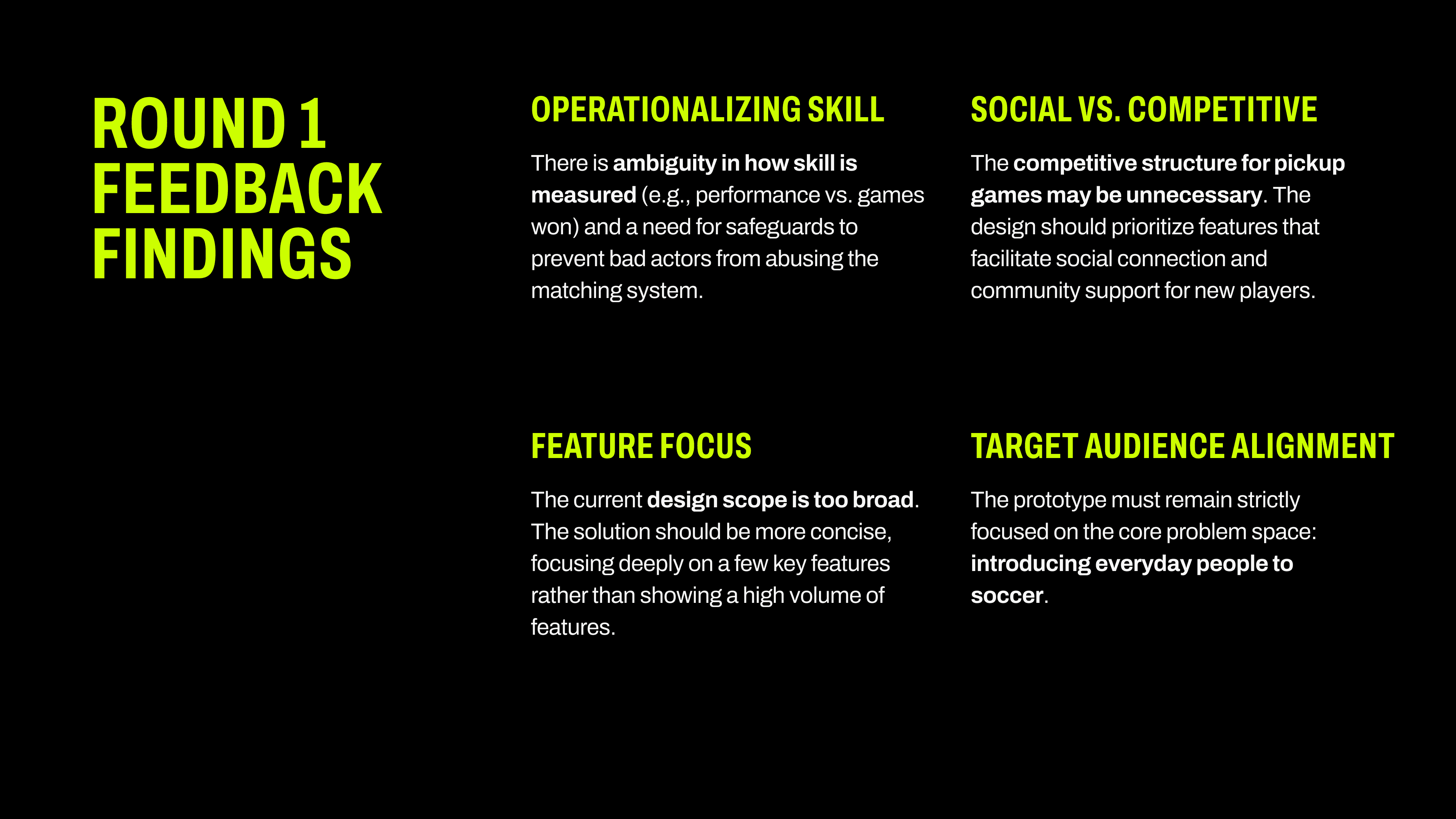
Feedback Round 1
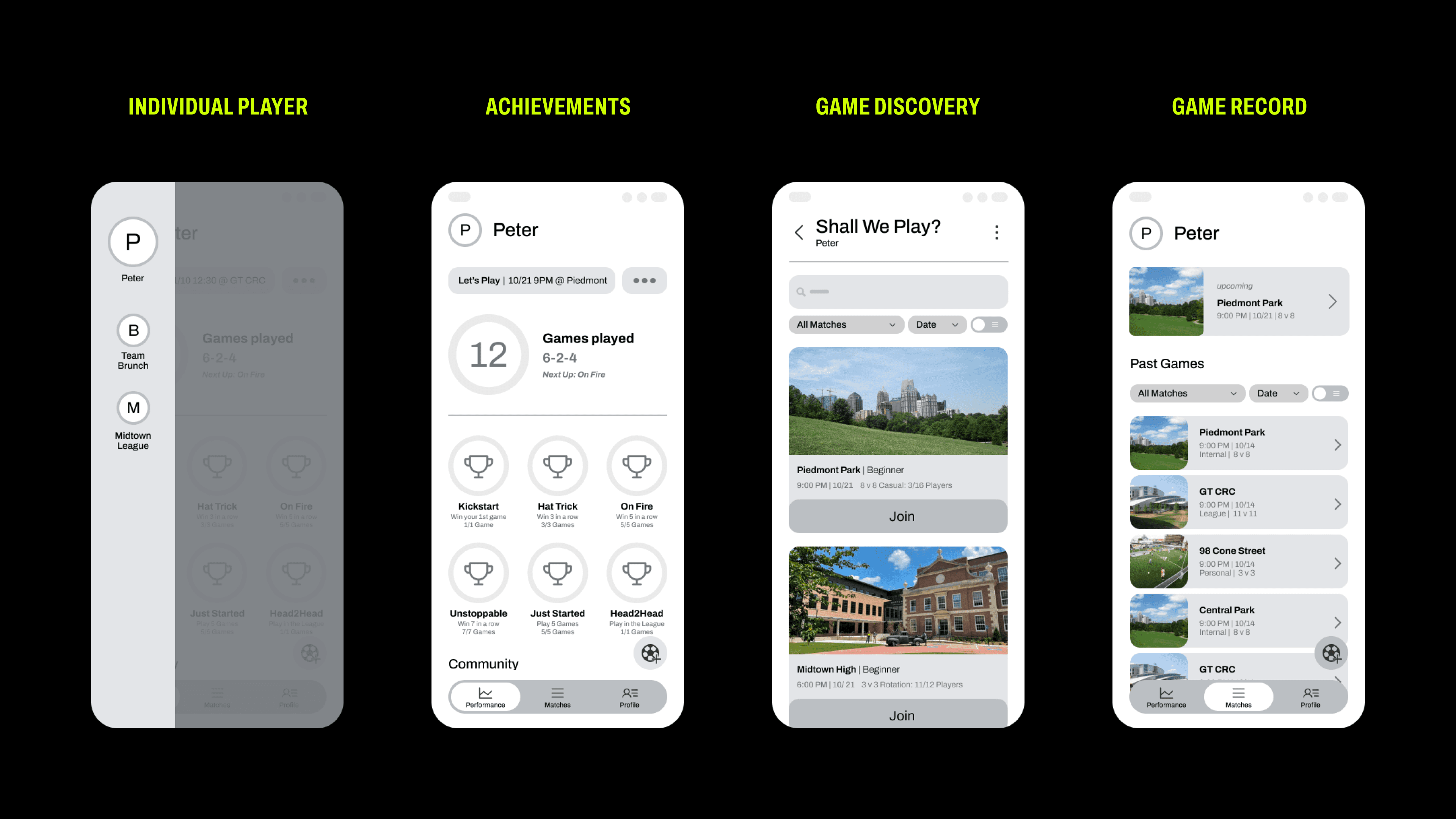
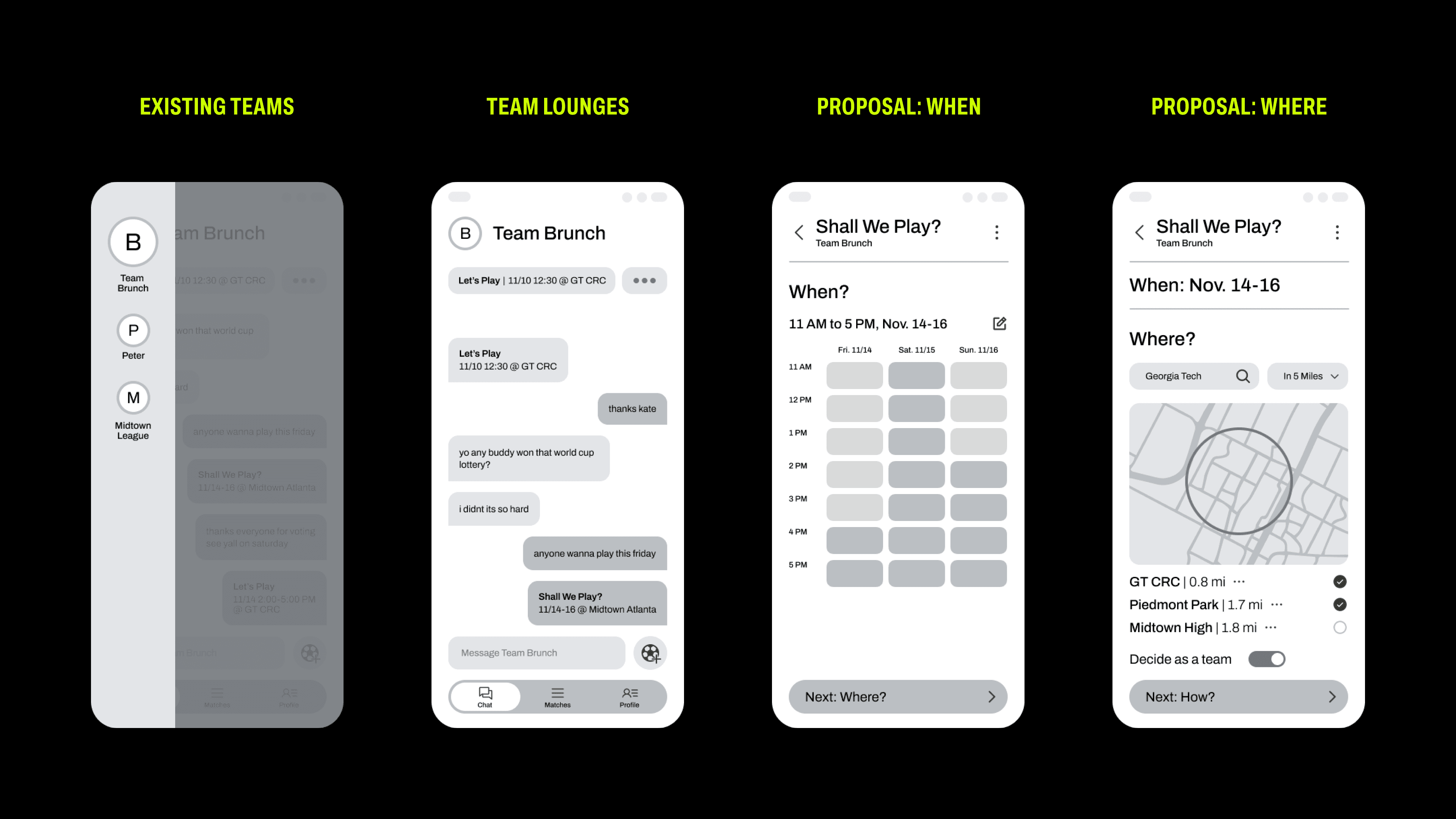
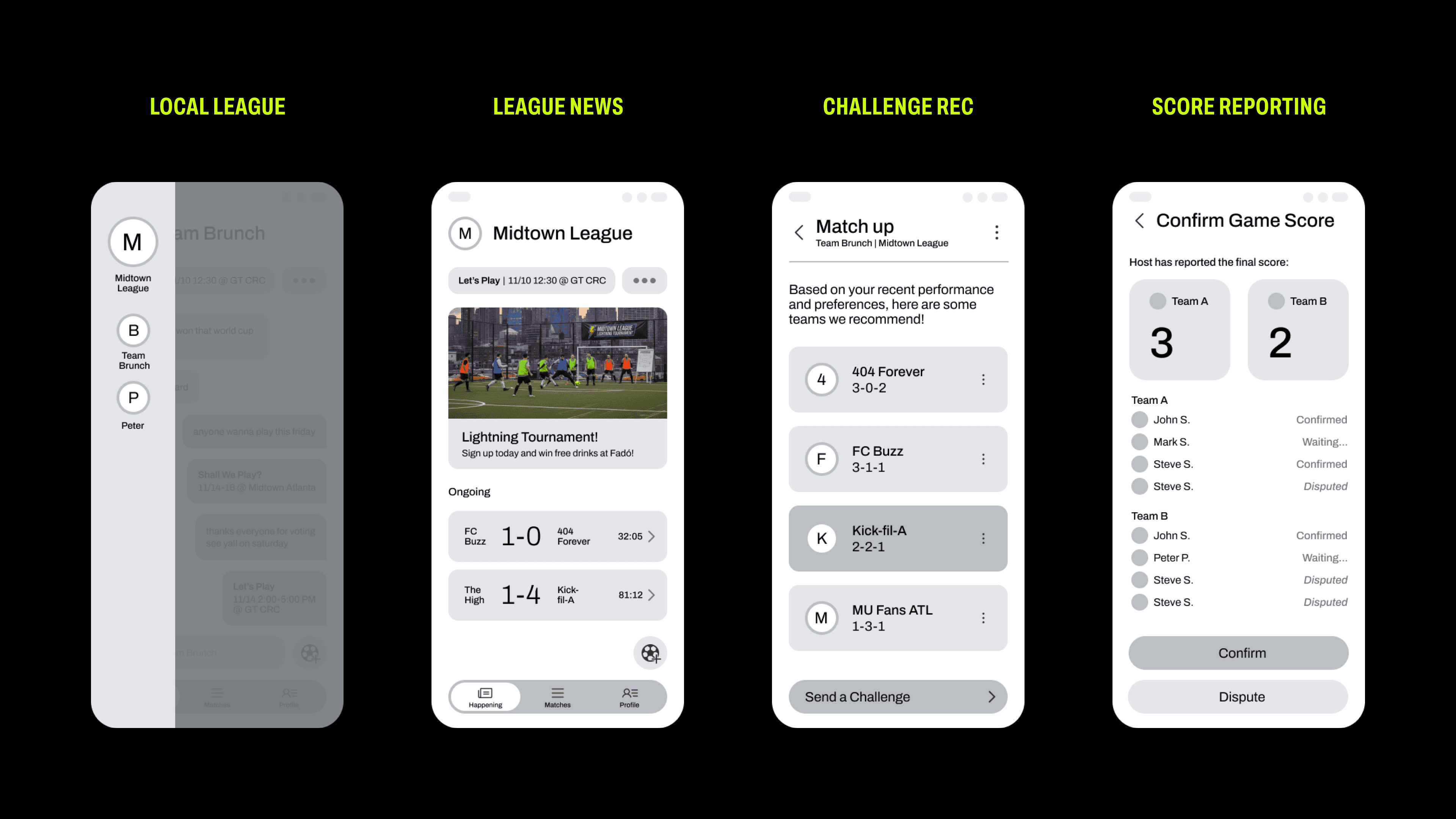
Design Round 2
Heuristic Evaluation
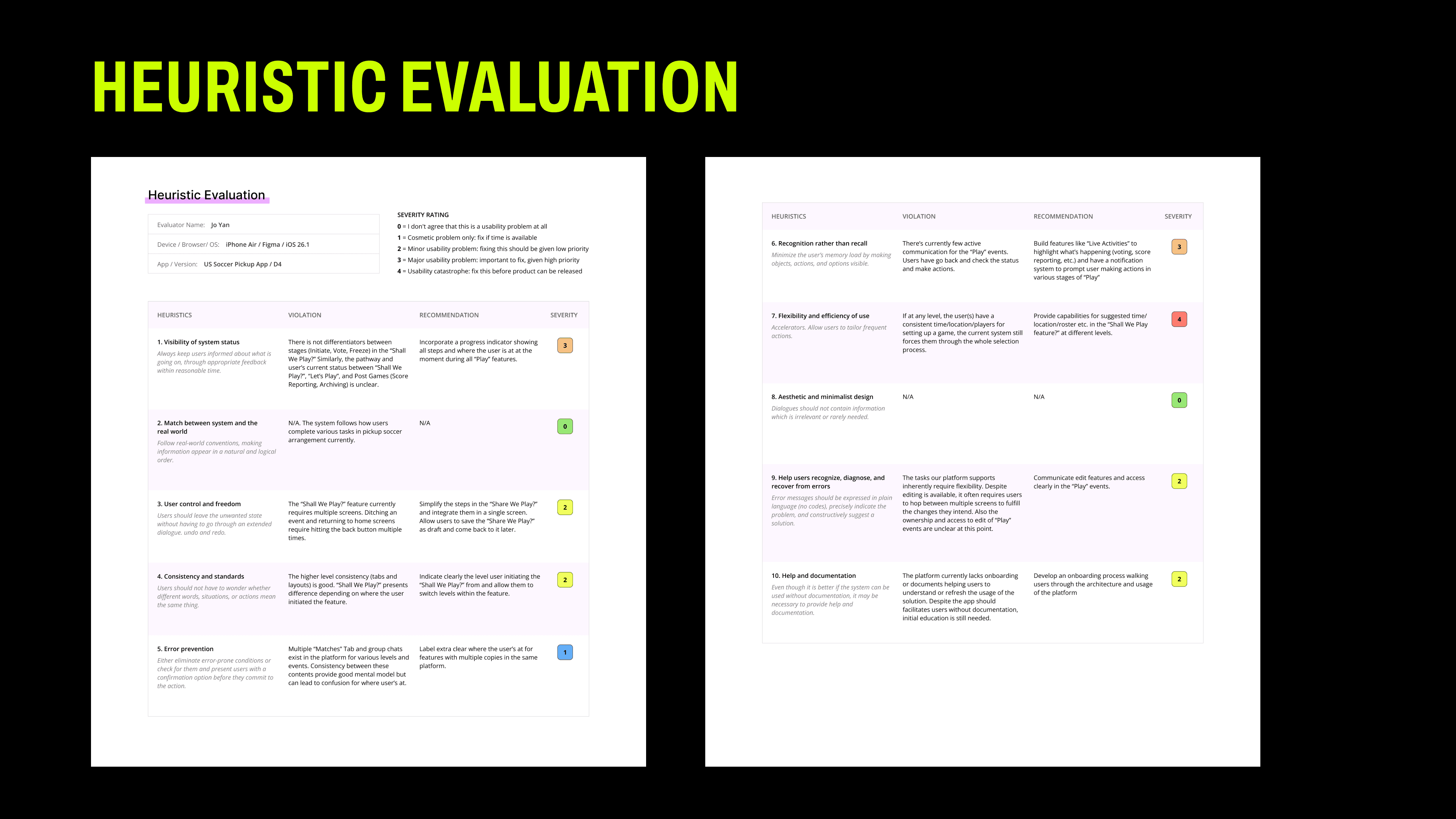
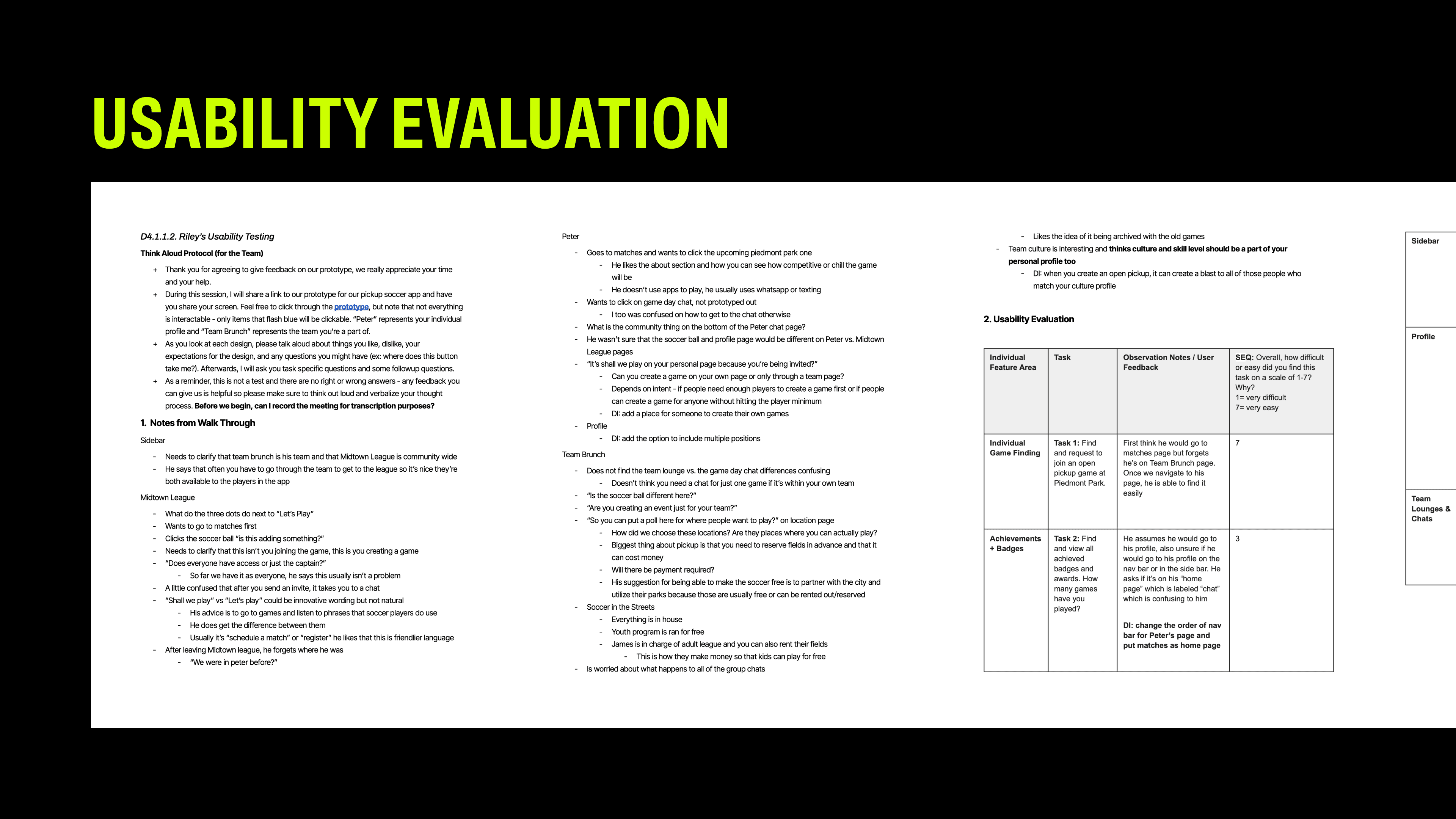
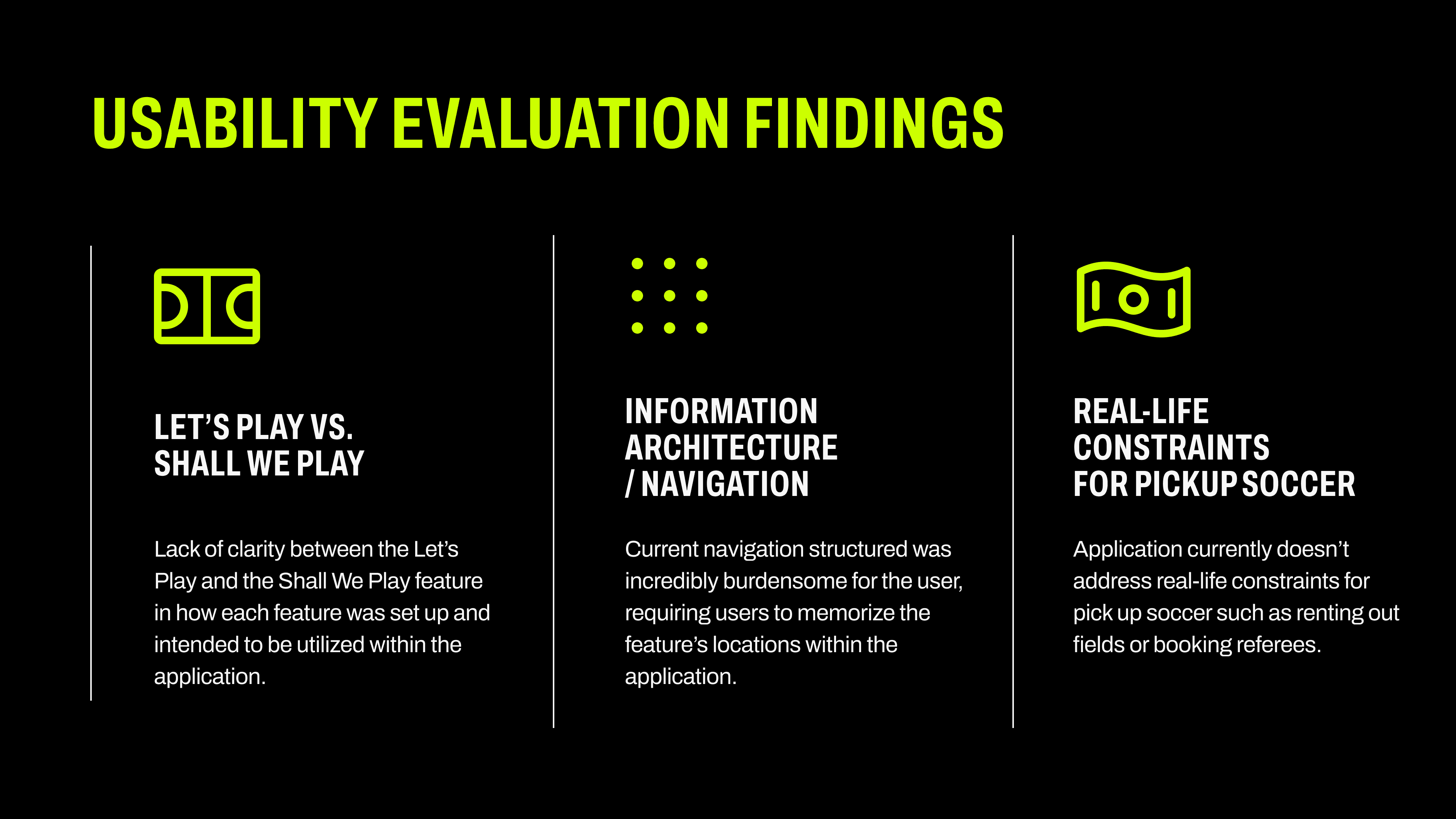
To evaluate the usability of our mid-fidelity prototypes, we employed a mixed-method approach combining expert analysis with user testing:
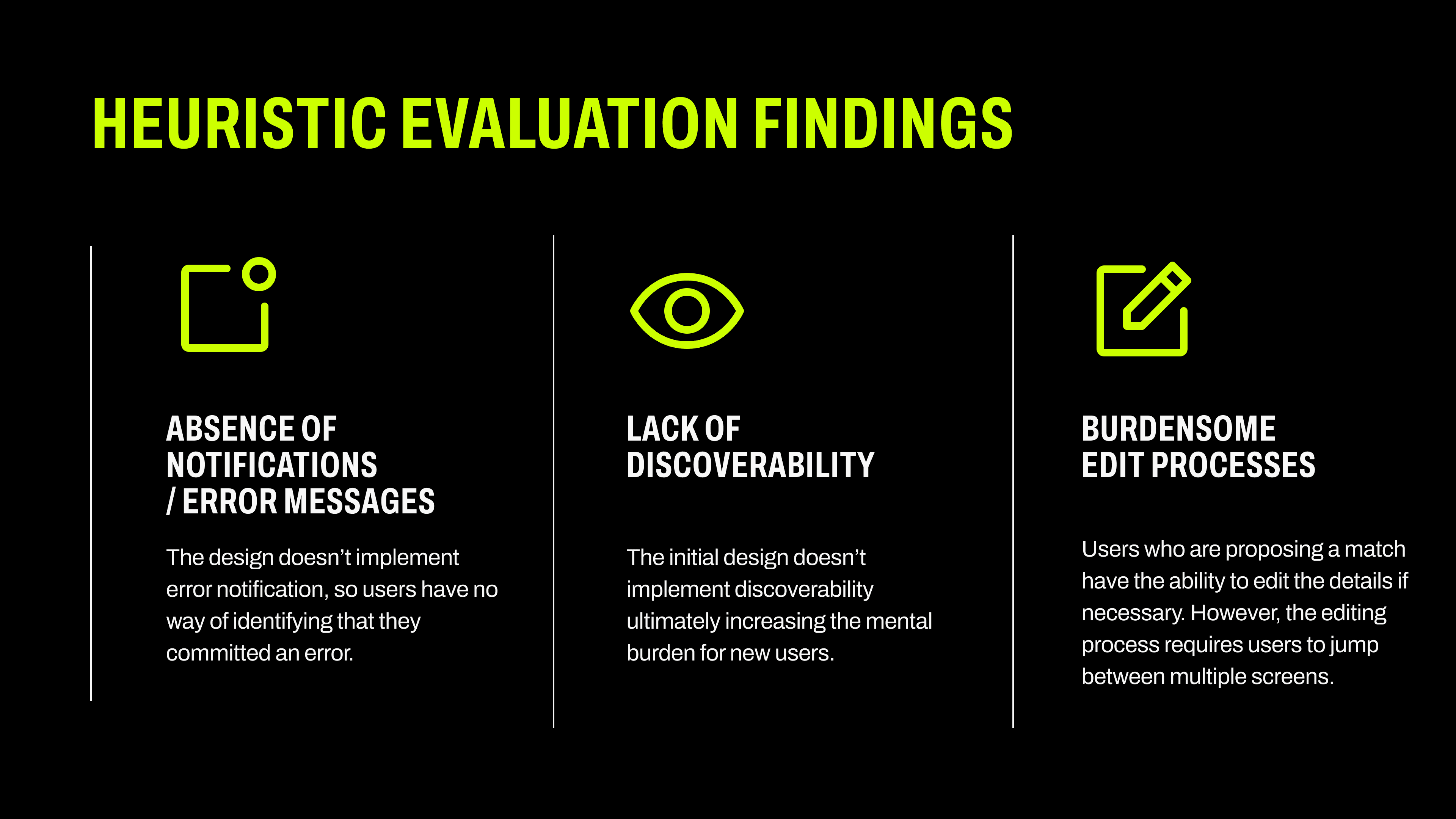
Heuristic Evaluation: Our team individually audited the interface using Nielsen Norman’s 10 Usability Heuristics. We assigned severity ratings to identify critical design violations and areas for improvement.
Usability Testing (Think Aloud): We validated our expert findings by conducting moderated testing with 4 active pickup soccer players. Utilizing the Think-Aloud Protocol, we asked users to verbalize their thought process while completing core tasks, such as proposing or finding a match.
Design Round 3
Expert Testing
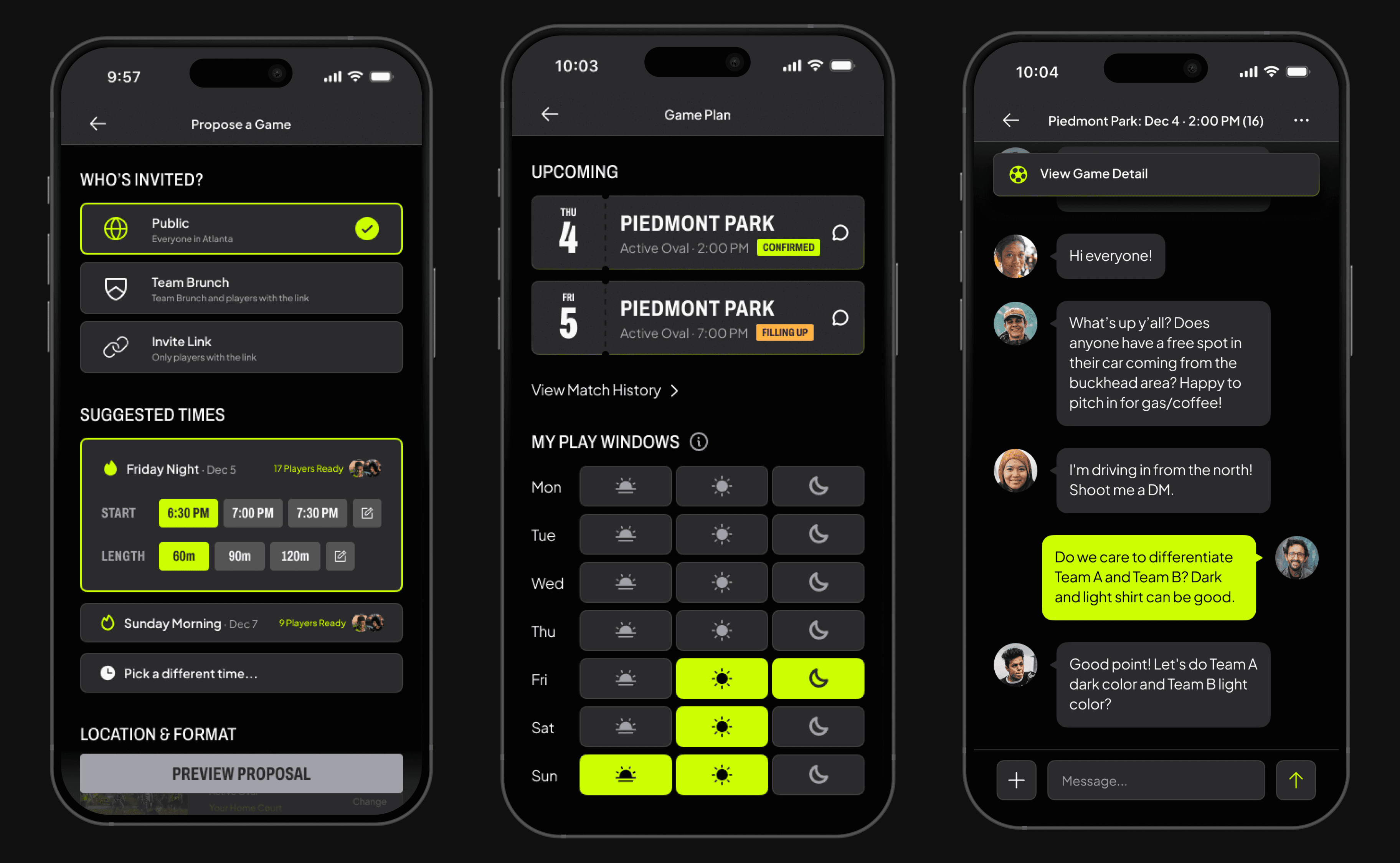
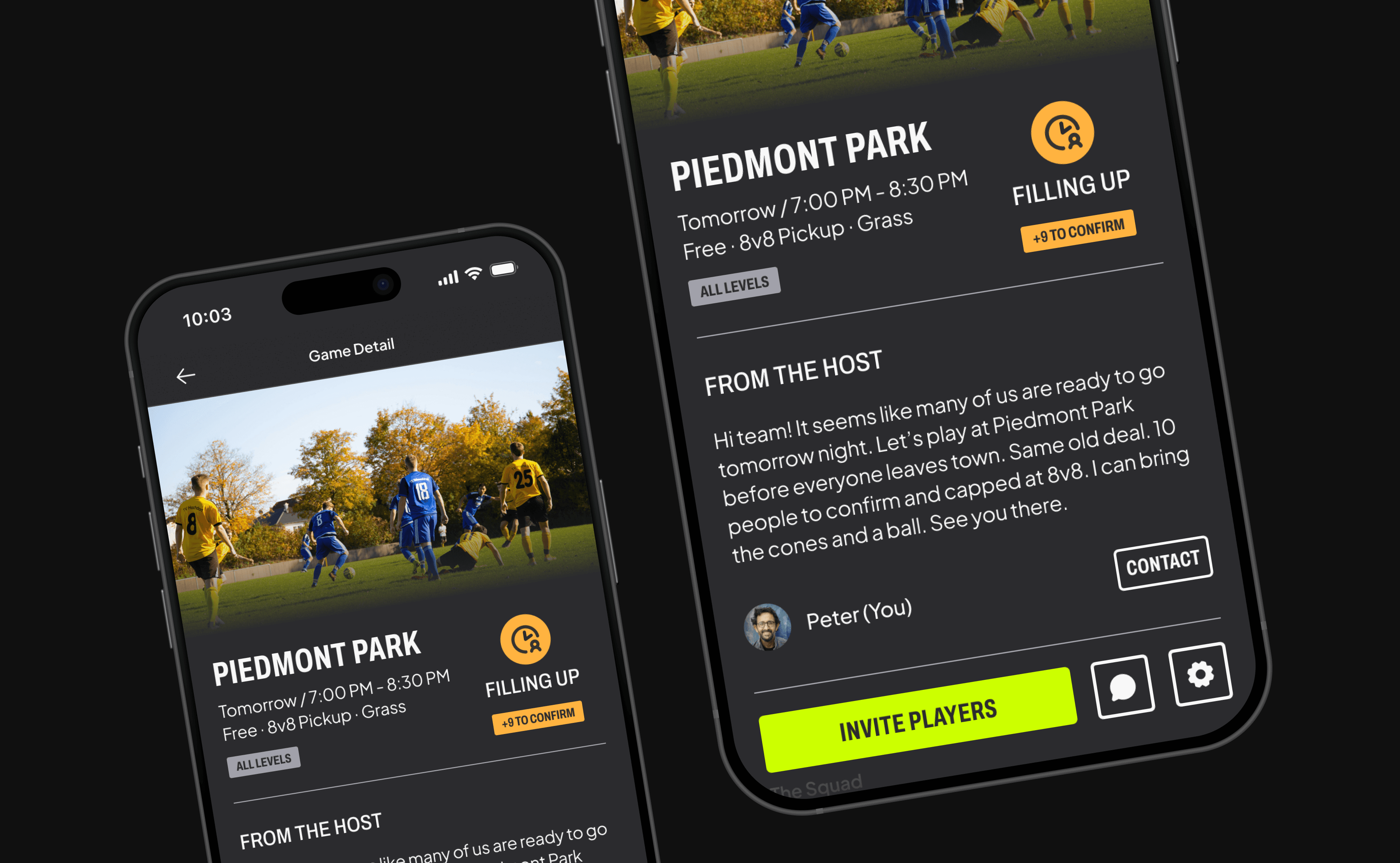
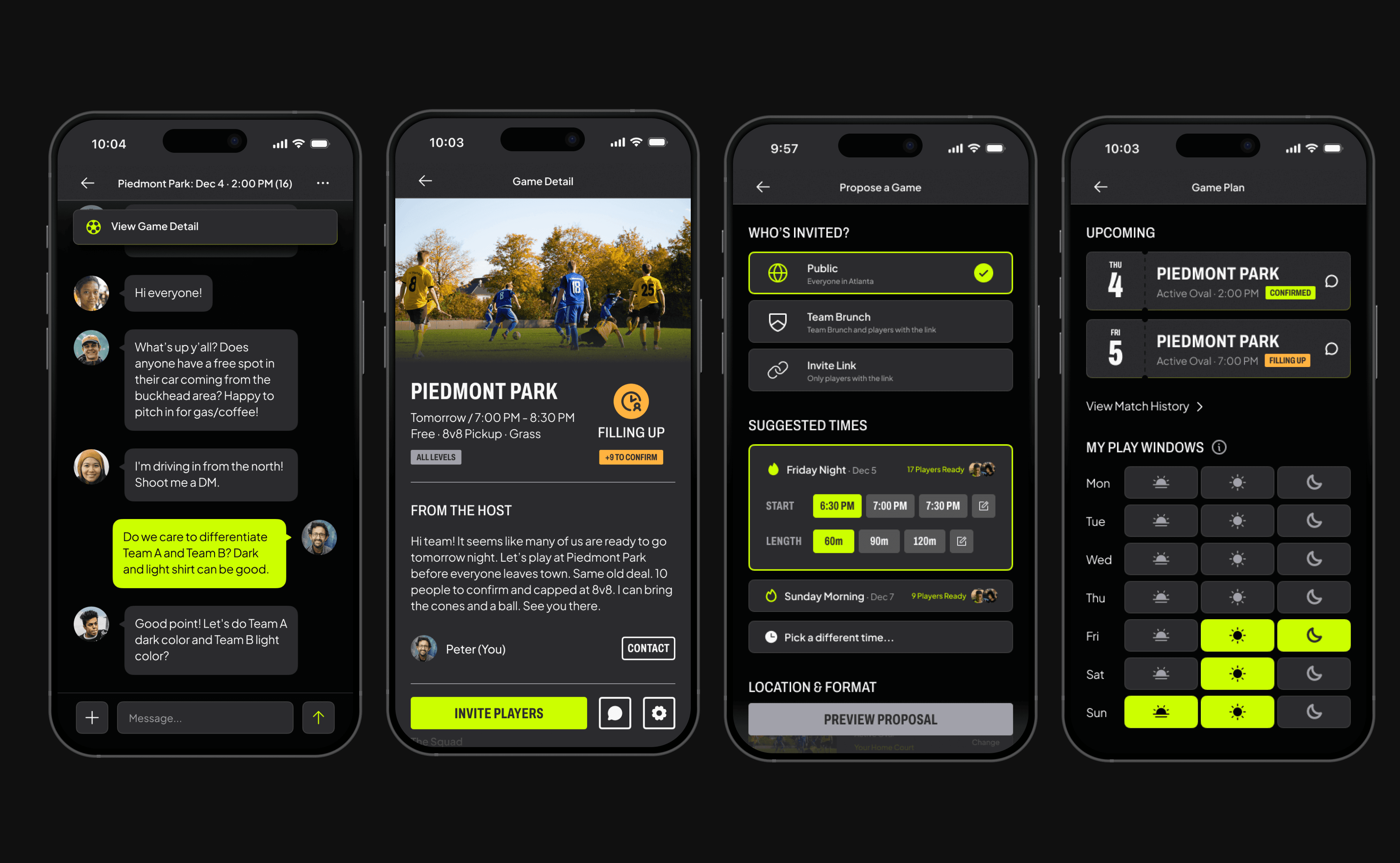
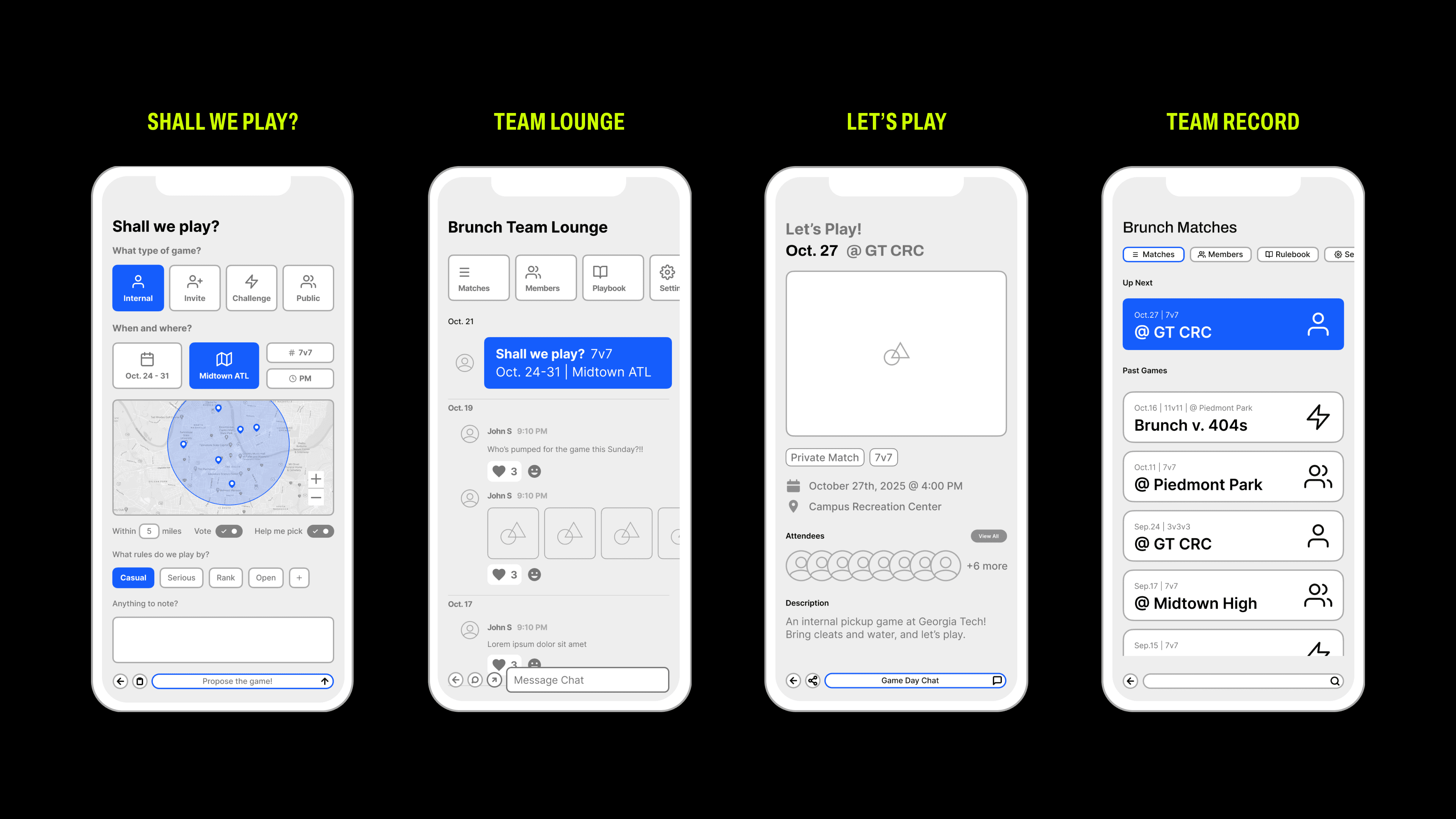
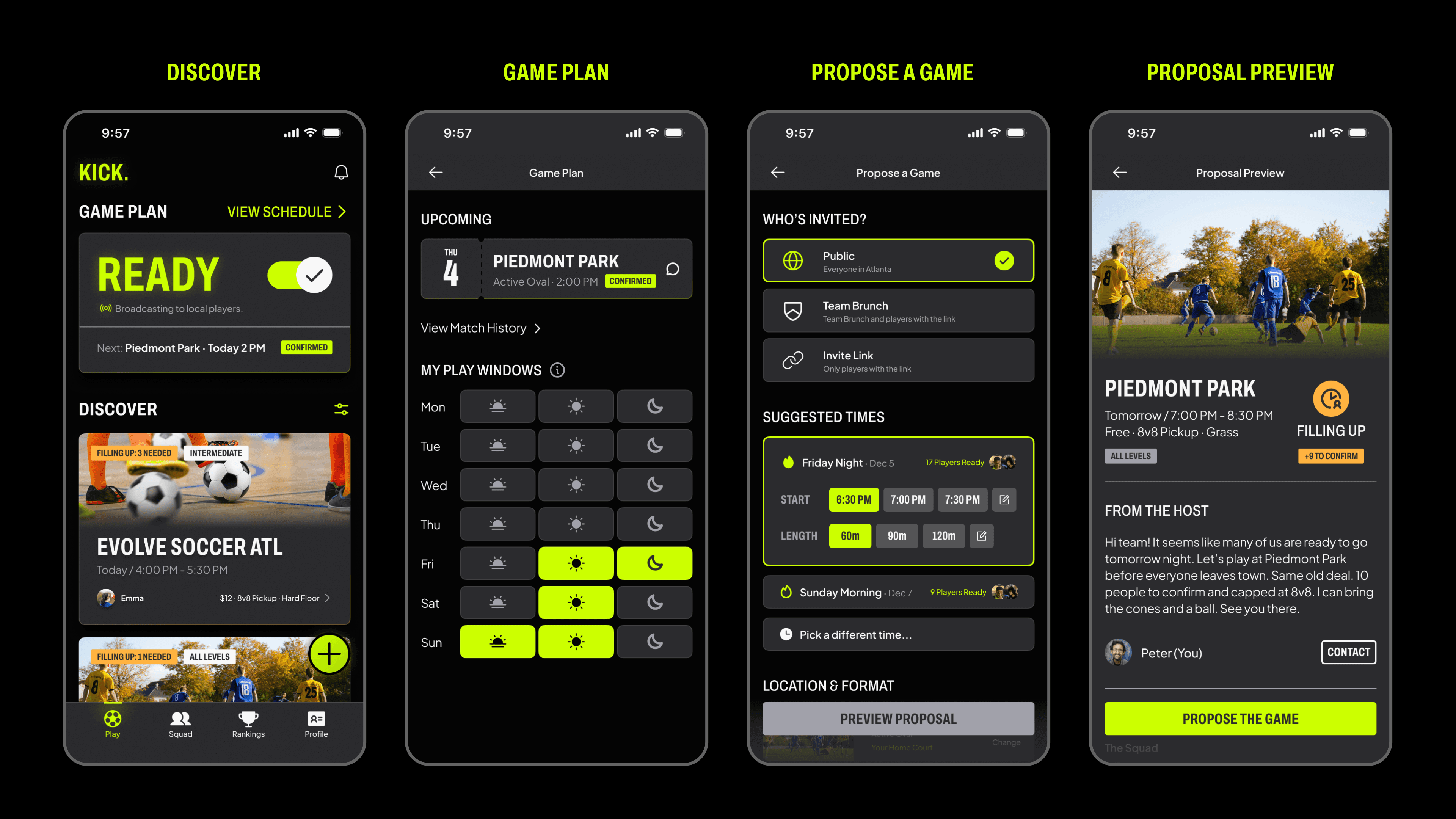
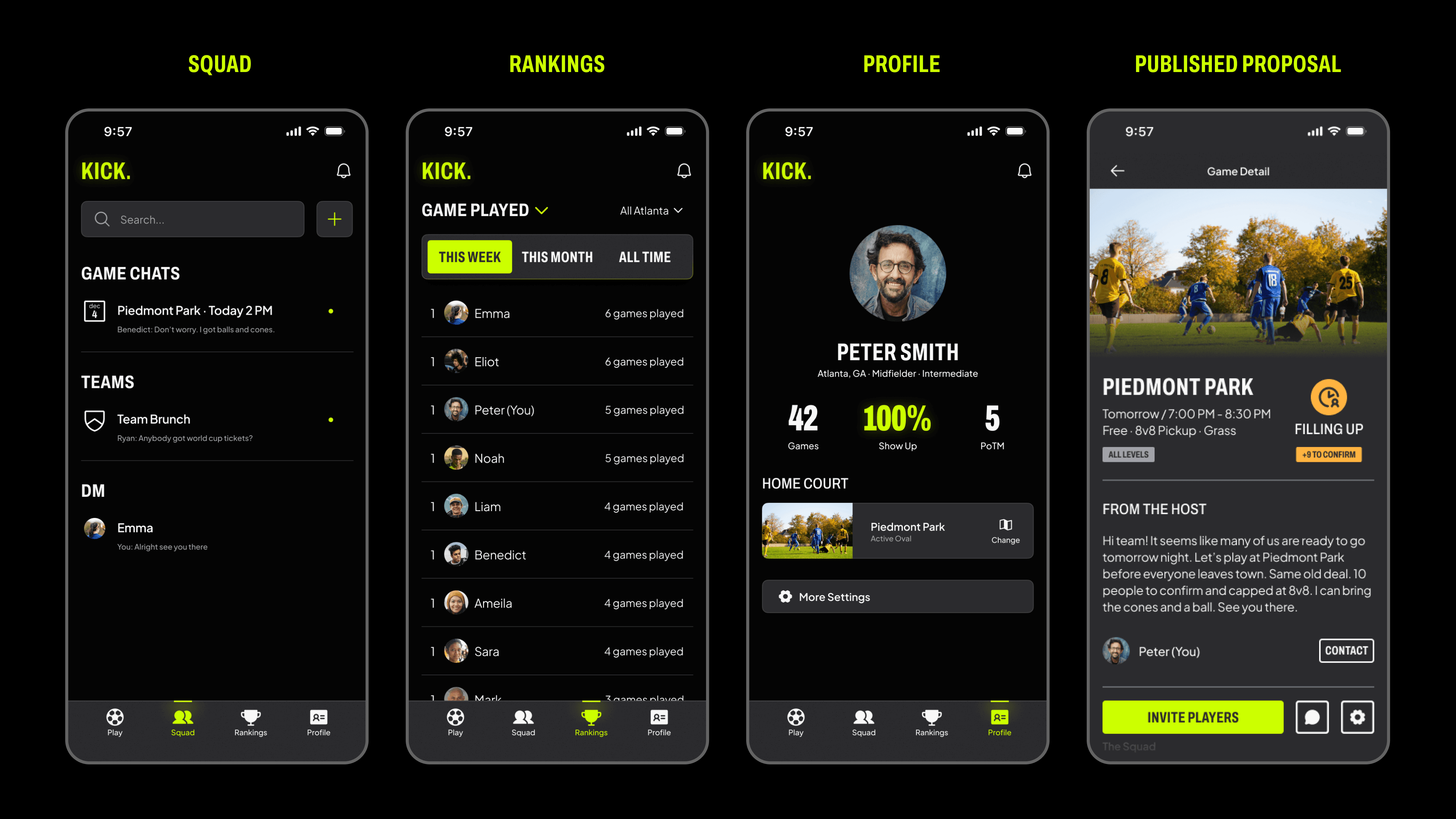
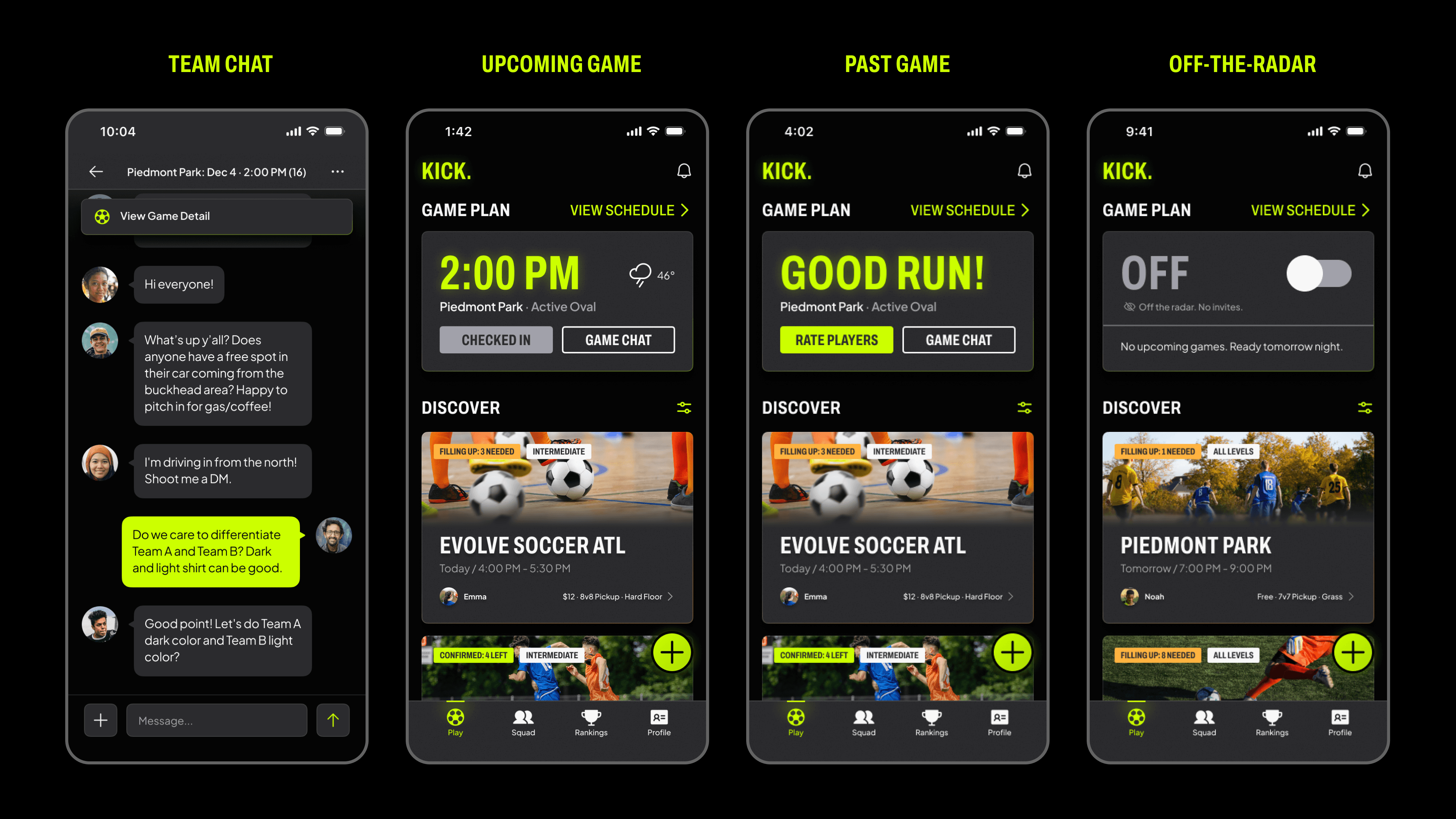
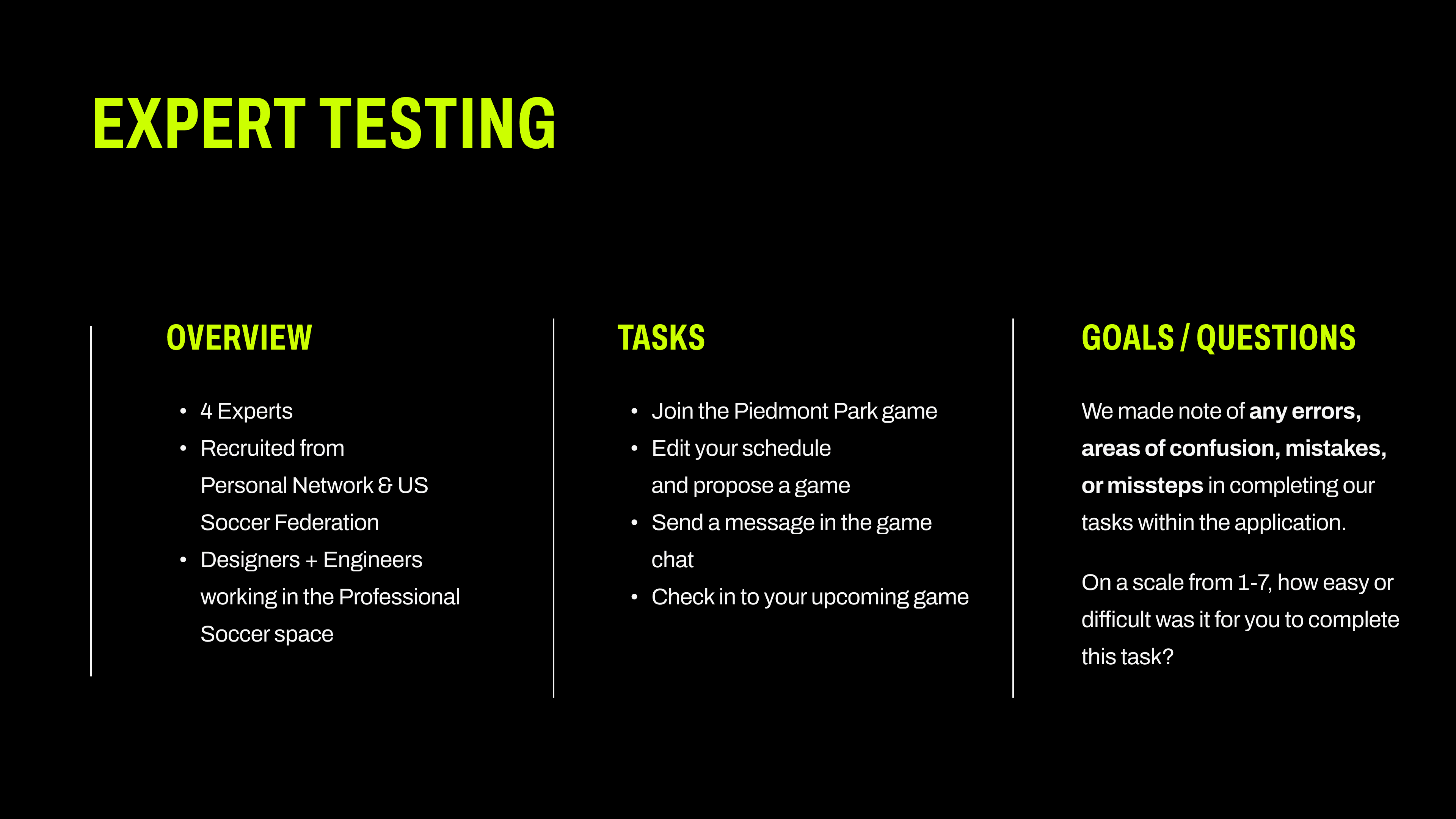
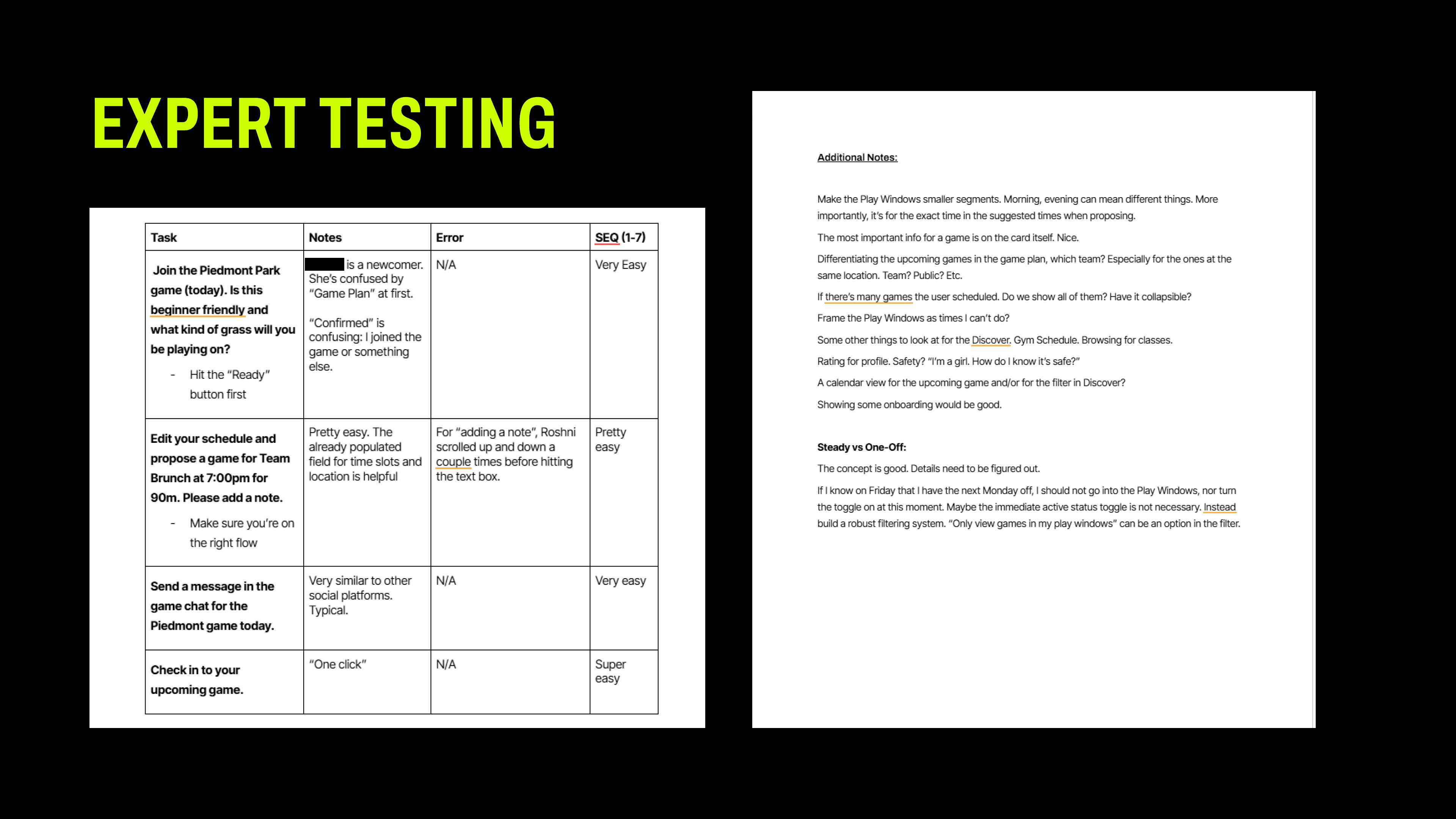
To validate our high-fidelity prototypes, we conducted an expert evaluation with four industry professionals, including designers and engineers recruited directly from the U.S. Soccer Federation. Participants were guided through four critical user journeys: joining a specific match at Piedmont Park, editing schedules to propose new games, utilizing the in-game chat, and performing a game check-in. Our primary goal was to identify usability friction by documenting errors, confusion, and missteps in real-time. We combined these qualitative observations with quantitative metrics by having experts rate the difficulty of each task using the Single Ease Question (SEQ) 7-point scale.
Final Design
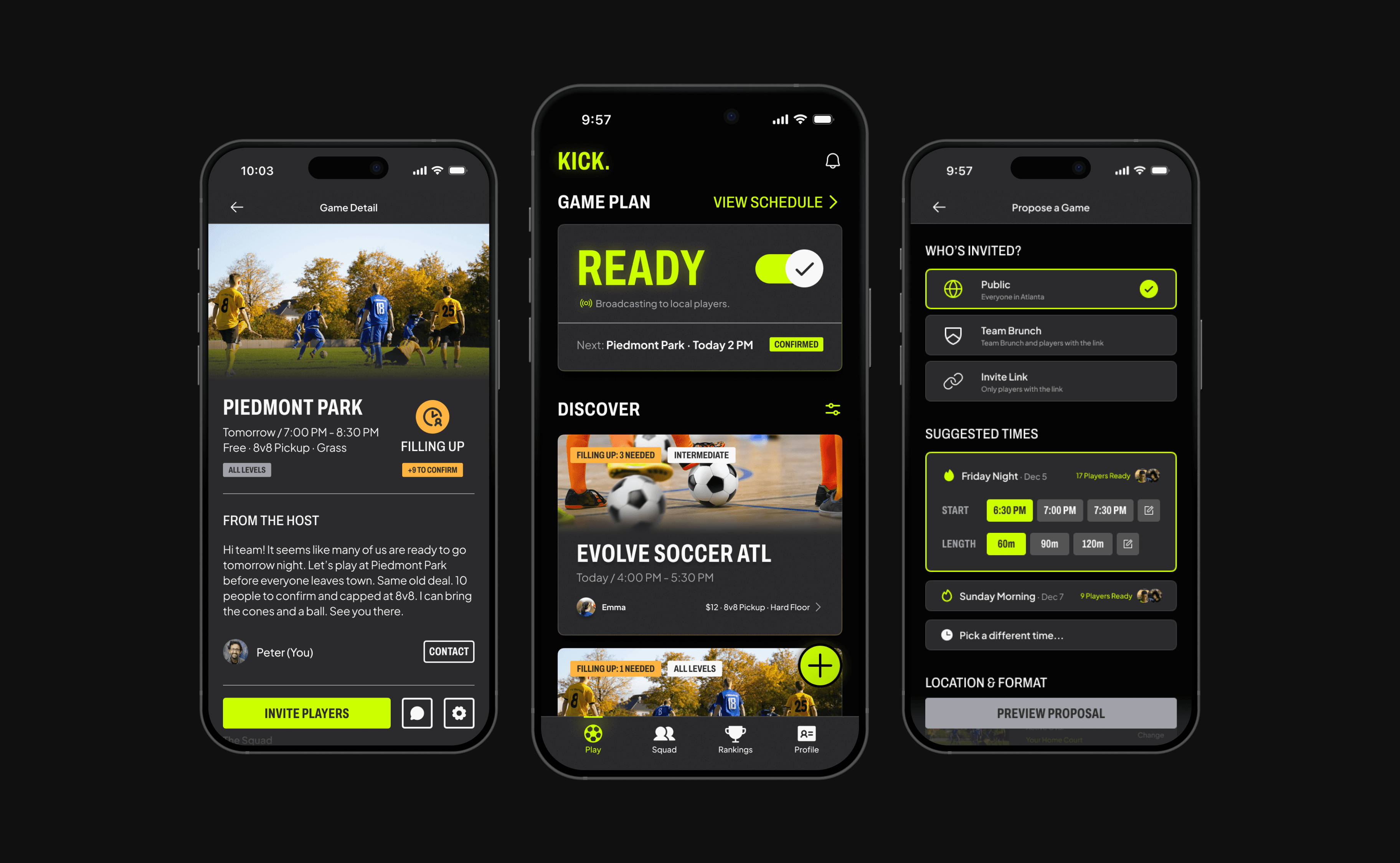
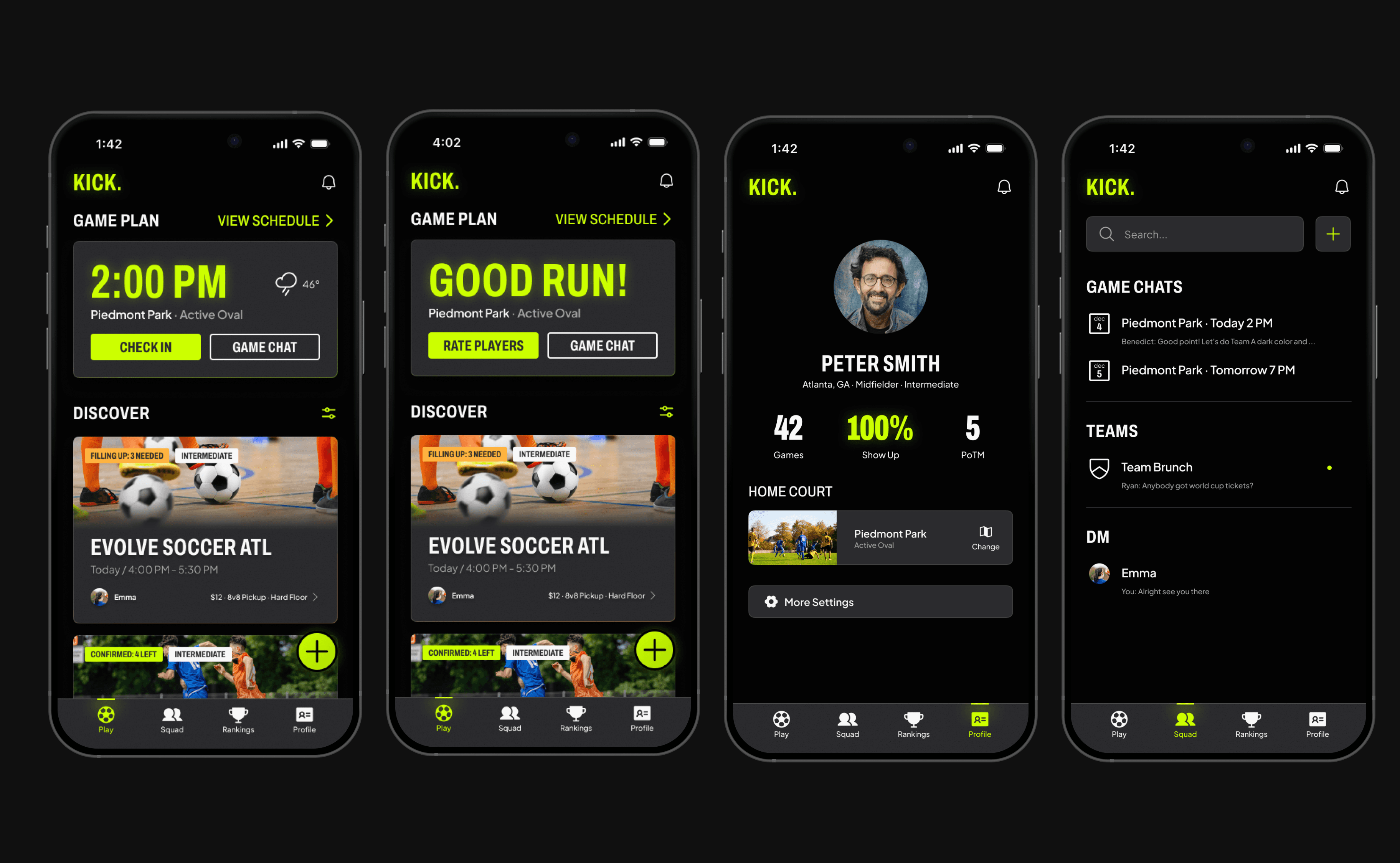
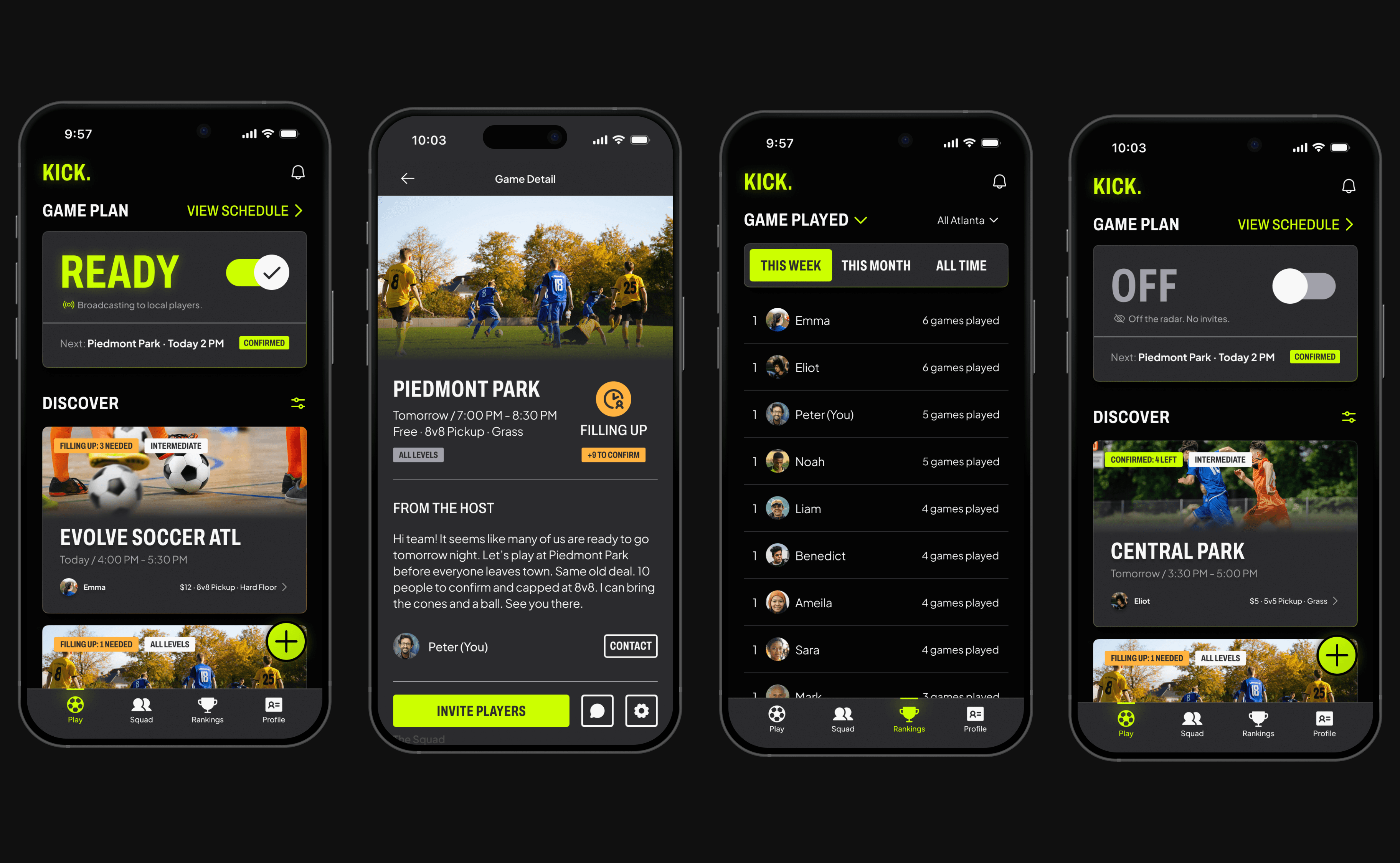
The project culminated in the handoff of a fully validated, high-fidelity prototype to our sponsor, the U.S. Soccer Federation. By synthesizing rigorous expert feedback and user testing, we delivered a polished design system that addresses the core logistics of the pickup experience, from discovery to game-day coordination. The result is more than just a scheduling tool; it is a digital hub designed to foster long-term player retention and build a stronger, more connected U.S. soccer community.